Collagen Protein: What It Is, Forms, and Pros & Cons
Collagen protein has exploded in popularity over the past few years, with marketers claiming it can do everything from soothe your joints to smooth your skin, boost recovery, grow your hair, and more.
Skeptics, meanwhile, argue that collagen’s supposed benefits are misrepresented, overblown, or flat out false.
So who’s right?
The truth sits somewhere in the middle.
Collagen protein is still a lousy muscle-building protein, but newer research shows that properly dosed collagen peptides can support connective tissue health, joint comfort, recovery, and even improve your skin’s appearance.
In this article, we’ll break down what collagen can—and can’t—do, what the research actually shows, and which type of collagen is worth your money.
Key Takeaways
- Collagen is a poor muscle-building protein. It’s incomplete, low in essential amino acids, and far less effective than whey or casein for stimulating muscle growth.
- But collagen peptides do have benefits: they can increase collagen synthesis, support healthier connective tissue, and may boost recovery from exercise.
- Research also shows collagen can meaningfully improve joint comfort and function, especially in people with achy or arthritic knees.
- Collagen may modestly improve skin appearance, including small boosts in skin hydration, elasticity, and wrinkle depth.
- Cardiovascular effects are minor, but some studies show supplementing with collagen may lead to small reductions in LDL cholesterol, systolic blood pressure, and fat mass.
- What Is Collagen Protein Powder?
- Is Collagen a “Complete” Protein?
- Does Collagen Protein Build Muscle?
- What About Collagen Protein’s Other Benefits?
- Does Whey Protein Have Collagen?
- The Bottom Line on Collagen Protein Powder and Collagen Peptides
- FAQ #1: Is protein powder with collagen good for you?
- FAQ #2: Is it safe to drink collagen every day?
- FAQ #3: Which is better, collagen protein or whey protein?
- Want More Content Like This?
Table of Contents
+What Is Collagen Protein Powder?
Collagen is the main structural protein in your body’s connective tissues—the stuff that holds you together. It’s the primary building block of your skin, cartilage, bones, tendons, ligaments, and even parts of your teeth.
The collagen used in collagen protein powders comes from the connective tissues of animals—usually cows, chickens, or fish. Manufacturers extract and process these tissues to produce a fine, mostly tasteless powder.
There are dozens of types of collagen, but the most talked-about are:
- Type I: The most abundant form, found in skin, tendons, ligaments, and bone.
- Type II: Concentrated in cartilage and important for joint function.
- Type III: Found in skin, lung tissue, and the vascular system.
Collagen protein powders typically contain a mixture of these types, but regardless of the blend, the end product is the same: a powdered form of collagen derived from animal connective tissue.
Collagen Peptides vs. Collagen Protein Powder: What’s the Difference?
The difference between collagen peptides and collagen protein powder is how they’re processed:
- Collagen protein powder is just powdered collagen.
- Collagen peptides are collagen that’s been hydrolyzed—broken into smaller pieces (peptides) so it mixes easily and digests quickly.
In practice, almost every collagen supplement on the market today is hydrolyzed collagen. So when you see “collagen peptides” on a label, you’re not looking at a different type of collagen—you’re looking at a more processed form of standard collagen protein powder.
Is Collagen a “Complete” Protein?
No—collagen protein is not “complete.”
A complete protein is one that . . .
- Contains all nine essential amino acids that your body can’t make on its own
- Provides them in amounts that support muscle growth, repair, and overall health
Examples of complete proteins include meat, eggs, and protein powders like whey and casein.
Here’s the typical amino acid profile of a collagen protein supplement:
Typical Amino Acid Profile of a Collagen Supplement
| Amino Acid | Average Milligrams per Serving |
|---|---|
| Alanine | 1,139 mg |
| Arginine | 917 mg |
| Aspartic Acid | 610 mg |
| Cystine | 4 mg |
| Glutamic Acid | 1,270 mg |
| Glycine | 2,178 mg |
| Histidine†† | 86 mg |
| Hydroxyproline | 1,560 mg |
| Isoleucine†† | 138 mg |
| Leucine†† | 272 mg |
| Lysine†† | 396 mg |
| Methionine†† | 116 mg |
| Phenylalanine†† | 197 mg |
| Proline | 961 mg |
| Serine | 322 mg |
| Threonine†† | 302 mg |
| Tryptophan†† | 0 mg |
| Tyrosine | 35 mg |
| Valine†† | 252 mg |
†† Indicates essential amino acids

As you can see, collagen protein is made mostly of glycine, proline, hydroxyproline, alanine, and glutamic acid—amino acids that are non-essential from a dietary perspective and give collagen a very different profile from high-quality, muscle-building proteins. It’s also notoriously low in leucine, the amino acid that kickstarts muscle protein synthesis. For reference:
In other words, collagen lacks the amino acid profile required to do the things people typically take protein powder for . . .
Does Collagen Protein Build Muscle?
No—collagen protein isn’t very effective for building muscle.
As you just learned, collagen isn’t a complete protein. It’s low in essential amino acids and especially low in leucine, the amino acid that flips the switch on muscle protein synthesis. That alone makes it a poor choice as your primary muscle-building protein powder.
That said, some research suggests collagen may still move the needle a little—but only in certain situations, and nowhere near as much as complete proteins.
Recent Research on Collagen Protein and Muscle Growth
A 2024 systematic review and meta-analysis published in Sports Medicine looked at 19 studies on supplementing with collagen peptides alongside strength training.
Compared to a placebo, daily collagen peptides (usually around 15 grams per day for at least 8 weeks) led to:
- Small but meaningful increases in fat-free mass (a proxy for muscle)
- Small improvements in muscle strength
- Some positive changes in “muscle architecture” (muscle structure)
Promising, yes—but there are important caveats:
- Most participants were older, undermuscled, and often undereating protein. In that situation, adding any extra 15 grams of protein plus lifting weights will usually help.
- The certainty of the evidence was mostly low to moderate, so the findings aren’t ironclad.
- When you compare collagen to a high-quality protein like whey, collagen loses.
A study from Northern University of Paraná (UNOPAR), which wasn’t included in that meta-analysis, makes this last point clear.
The researchers split eight men and three women into two groups:
- One took 35 grams of whey protein per day
- The other took 35 grams of collagen protein per day, spiked with extra leucine so both the whey and collagen supplements provided 3 grams of leucine per serving
Both groups followed the same 10-week strength training program and ate around 0.7–0.9 grams of protein per pound of body weight per day overall.
If collagen were “just as good as whey once you add leucine,” both groups should have gained similar amounts of muscle—but they didn’t.
- Quad size increased 8.4% vs. 5.6% in the whey and collagen groups, respectively
- Biceps size increased 10.1% vs. 6%, respectively
In other words, collagen’s problem isn’t just “not enough leucine” because even when you fix the leucine issue, the overall amino acid profile is still too poor to match whey for muscle growth.
Leucine helps start the muscle-building process, but you still need plenty of the other essential amino acids to actually build new muscle tissue. Collagen just doesn’t provide them in the right amounts.
Where Does That Leave Collagen for Muscle Growth?
Here’s a good way to think about it:
- Collagen protein can modestly support increases in muscle mass and strength, especially in older or undertrained people doing a structured exercise program.
- It’s still not a good primary protein source for building muscle compared to wholefood sources like meat, eggs, and dairy, or protein powders like whey and casein.
What About Collagen Protein’s Other Benefits?
So far we’ve mostly talked about collagen protein powder as a muscle-building protein source—and on that front, it’s still lousy compared to whey and casein.
Where it starts to look more promising is as a collagen-support supplement: there’s emerging evidence that properly dosed collagen peptides may help collagen synthesis, connective tissue and joint health, recovery, skin, and even cardiovascular health markers.
Collagen Synthesis
Collagen synthesis is your body’s process of making new collagen for tendons, ligaments, cartilage, and other connective tissues.
Recent research shows that taking collagen peptides—usually around 15 grams per day—can increase the body’s production of collagen, especially when you take it with a little vitamin C and pair it with exercise.
For example, one study found that resistance training alone didn’t boost collagen production in middle-aged lifters. But when the participants took collagen before training, their collagen-building response noticeably increased.
In simple terms: if you take the right amount of collagen peptides before exercise, your body seems to make more collagen afterward. And over time, that may help support stronger, healthier connective tissues.
Connective Tissue Health
Results from the 2024 Sports Medicine meta-analysis showed that long-term supplementation with collagen was linked to improvements in tendon morphology (how healthy and robust the tendon looks on imaging) and muscle–tendon structure overall.
That said, the authors rated the certainty of this evidence as very low, mainly because there weren’t many high-quality tendon studies and the participants varied a lot (age, training experience, protocols).
So the fairest takeaway is this: collagen peptides may support healthier, better-adapted tendons over time, especially when you’re training regularly—but the data are still early, not definitive.
Joint Health
A 2025 systematic review and meta-analysis of 11 studies with more than 800 people found that collagen supplementation led to significant improvements in pain and physical function in those with knee osteoarthritis symptoms.
In other words, for people with cranky, arthritic knees, taking collagen regularly seemed to help them hurt less and move more easily.
Recovery After Exercise
Collagen protein may also boost recovery. In a 3-week study, college athletes lifted weights and took either collagen with vitamin C or a placebo.
Both groups saw their explosiveness drop at first, but only the collagen group got back to baseline by the end of the study. They also improved how powerfully they could decelerate and re-accelerate in a jump test, while the placebo group didn’t.
In another study, sedentary people did a brutal drop-jump workout to cause muscle damage. Those taking collagen regained strength, explosiveness, and jump height faster over the following 48 hours than those taking a placebo.
Other studies show collagen may alleviate muscle soreness after exercise to a small degree, too.
Skin Health
Skin is mostly made of collagen, so it makes sense people take collagen supplements to help it look and feel better. And here, the research is encouraging.
A large meta-analysis of 19 randomized trials with over 1,000 people found that taking hydrolyzed collagen for 8–12 weeks improved skin hydration, elasticity, and wrinkle depth compared to a placebo.
Another review came to a similar conclusion: hydrolyzed collagen seems to modestly reduce visible signs of skin aging over time.
So while it’s not a magic eraser for wrinkles, collagen peptides do seem to give skin a small but real boost in moisture, firmness, and smoothness when taken consistently.
Cardiovascular Health
Collagen peptides may also nudge a few heart-health markers in the right direction, but the effects are small.
A 2023 systematic review and meta-analysis of 12 studies found that taking collagen peptides slightly reduced LDL (“bad”) cholesterol, lowered systolic blood pressure by ~5 mmHg, reduced fat mass, and increased fat-free mass.
That said, the evidence quality ranged from high to very low depending on the marker, and results varied a lot between studies, so this is more of a modest bonus than a miracle fix.
Does Whey Protein Have Collagen?
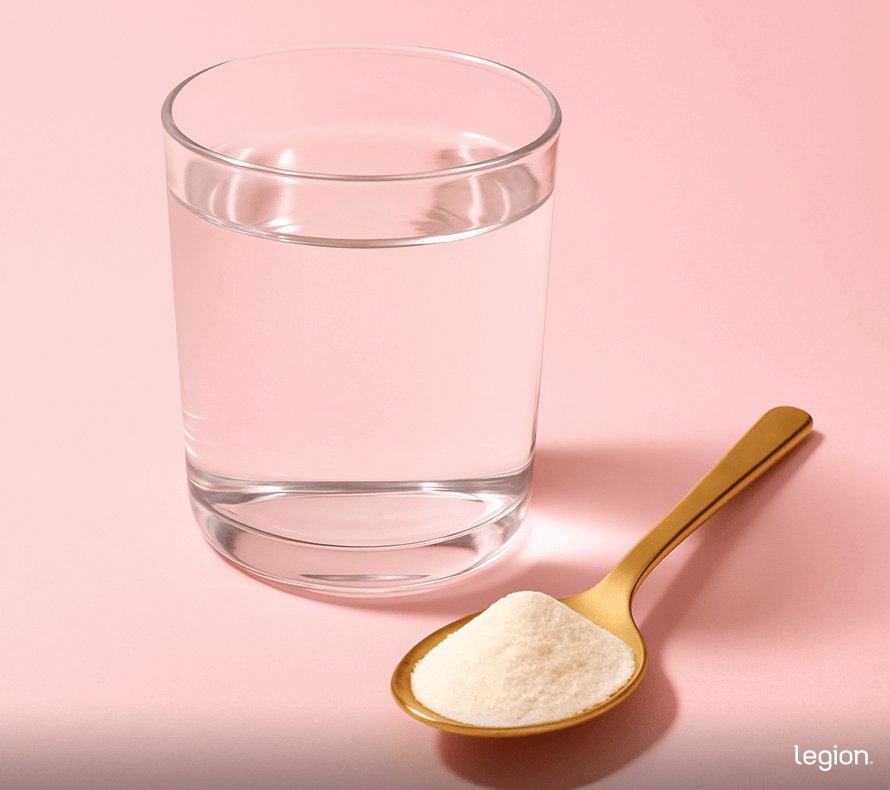
No—whey protein doesn’t naturally contain collagen. They’re completely different proteins: whey comes from milk, and collagen comes from the connective tissues of animals. So if you see a whey protein that contains collagen, it’s because the company added it on purpose.
Some brands mix whey and collagen and market the combo as an “all-around recovery” supplement. The idea is simple: whey supports muscle building, and collagen may help your joints and connective tissues. That pitch isn’t unreasonable.
But not every company includes collagen for the right reasons.
Because collagen is cheap and still counts as “protein” on a nutrition label, some brands use it to inflate the protein number without making the product any better for building muscle. This is a common trick in the supplement industry, and it’s something you should watch for when choosing a protein powder.
To understand how this works—and how to avoid getting misled—check out this article:
The Bottom Line on Collagen Protein Powder and Collagen Peptides
Collagen protein is still a poor muscle-building protein—it’s incomplete, low in essential amino acids, and nowhere near as effective as whey or casein.
But collagen peptides are no longer the supplement industry’s punchline.
Newer research shows that pairing collagen peptides with regular training can:
- Increase collagen synthesis
- Support healthier tendons and connective tissue
- Improve joint comfort and function—especially in people with achy or arthritic knees
- Modestly enhance recovery after hard workouts
- Improve skin hydration, elasticity, and smoothness
- Slightly improve a few cardiovascular markers
These aren’t magic, overnight changes—but they’re real, measurable benefits.
FAQ #1: Is protein powder with collagen good for you?
Yes—if you’re taking it for the right reasons. Collagen protein powder isn’t good for building muscle, so it shouldn’t replace whey or casein. But collagen peptides can support collagen synthesis, joint comfort, tendon health, recovery, and even skin hydration when you take around 15 grams per day consistently.
FAQ #2: Is it safe to drink collagen every day?
For most people, yes—collagen peptides are considered very safe for daily use. The main exception is if you’re allergic to the source of the collagen (for example, fish-based collagen). And as always, if you have a medical condition or any concerns, check with your doctor before taking a new supplement.
FAQ #3: Which is better, collagen protein or whey protein?
For building muscle, whey wins by a mile. Whey is a complete, high-quality protein rich in essential amino acids and leucine—the key driver of muscle protein synthesis.
Collagen is low in these amino acids, so it simply can’t compete for muscle growth. Where collagen is superior is connective-tissue support, joint comfort, and skin health.
Want More Content Like This?
Check out these articles:
- How Much Protein Should I Eat a Day? What Science Says
- Is Your Protein Powder Poisoning You?
- Is Grass-Fed Whey Protein Powder a Scam?
The post Collagen Protein: What It Is, Forms, and Pros & Cons appeared first on Legion Athletics.
https://ift.tt/eS48qAn December 01, 2025 at 07:00PM Legion Athletics


Comments
Post a Comment