Minimalist Workouts: How to Build Muscle in Less Time
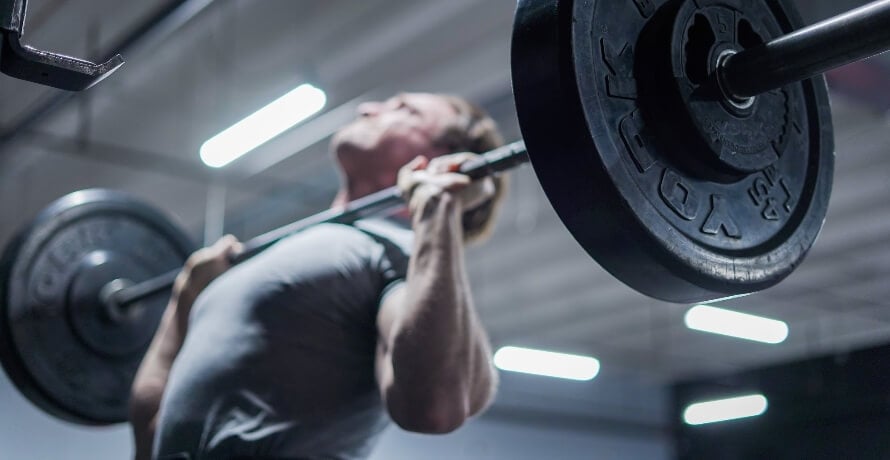
Most people think you need to spend hours in the gym each week to build muscle, gain strength, and stay healthy.
That’s why “I don’t have time” is one of the most common reasons people give for not working out.
But research shows this isn’t true.
You can make meaningful progress with far less training than most people think—if you focus on the right aspects of training.
In this article, you’ll learn what a minimalist workout is, why it works, and how to follow a simple routine that helps you build muscle, gain strength, and improve your health in just a couple of short workouts each week.
Key Takeaways
- Minimalist workouts focus on getting the most results from the least amount of training.
- You can build muscle, gain strength, and improve your health with just 1–2 workouts per week.
- Effective minimalist training emphasizes compound exercises, covering all major movement patterns, and training close to failure.
- Techniques like supersets and rest-pause training can help you save even more time in the gym.
- Minimalist training is best for people who want solid results without organizing their lives around the gym.
- What Is a Minimalist Workout?
- Do Minimalist Workouts Work?
- How Do You Make a Minimalist Workout Effective?
- A Simple 2-Day Full-Body Minimalist Workout Routine
- How Many Days Per Week Should You Do a Minimalist Workout?
- Who Is a Minimalist Workout Best For?
- The Bottom Line on Minimalist Workout
- FAQ #1: Do minimalist workouts work for beginners?
- FAQ #2: Can you build muscle with a minimalist workout?
- FAQ #3: Is a minimalist workout the same as a 2-day full-body workout?
- FAQ #4: How long should a minimalist workout take?
- Want More Content Like This?
Table of Contents
+What Is a Minimalist Workout?

A minimalist workout routine is a training plan designed to give you the most results for the least time investment.
That doesn’t mean it’s “easy”—it means stripping your training down to the essentials and focusing on the small number of things that matter most.
In practice, minimalist training emphasizes exercises that train lots of muscle at once, often involves training just a few times per week, and avoids unnecessary work that adds time without greatly improving results.
In other words, instead of asking, “What’s the most I can do?” a minimalist approach to training asks, “What’s the least I need to do to make progress?”
Do Minimalist Workouts Work?
Yes, minimalist workouts work—you can make excellent progress with surprisingly little training.
For example, research shows that lifting weights for just 30–60 minutes per week is enough to maximize reductions in your risk of all-cause mortality, cardiovascular disease, and cancer.
You also don’t need much training to get stronger. Multiple studies show that doing just one heavy set per exercise per week can produce meaningful strength gains, especially if you take that set close to failure.
And when it comes to building muscle, you can make significant progress with far less training than most people think.
For instance, a systematic review and meta-analysis of 15 studies conducted by scientists at Lehman College found that doing just 1–4 sets per muscle group per week can produce about 64% of the muscle growth you’d get from a more maximal approach to training.
Doing 5–9 weekly sets gets you even closer—around 84% of your potential gains.
In other words, you don’t need a high-volume program to see meaningful results. That said, minimalist strength training isn’t optimal if your goal is to maximize muscle growth as quickly as possible. There’s a clear relationship between how much training you do and how much muscle you build, up to a point.
So while doing less work still “works,” doing more—usually in the range of 10–20 sets per week—generally works better.
But that misses the point of minimalist training.
Minimalist workouts aren’t about getting the absolute best results—they’re about getting good results in a fraction of the time. And for most people—especially those with busy schedules—that trade-off is more than worth it.
How Do You Make a Minimalist Workout Effective?
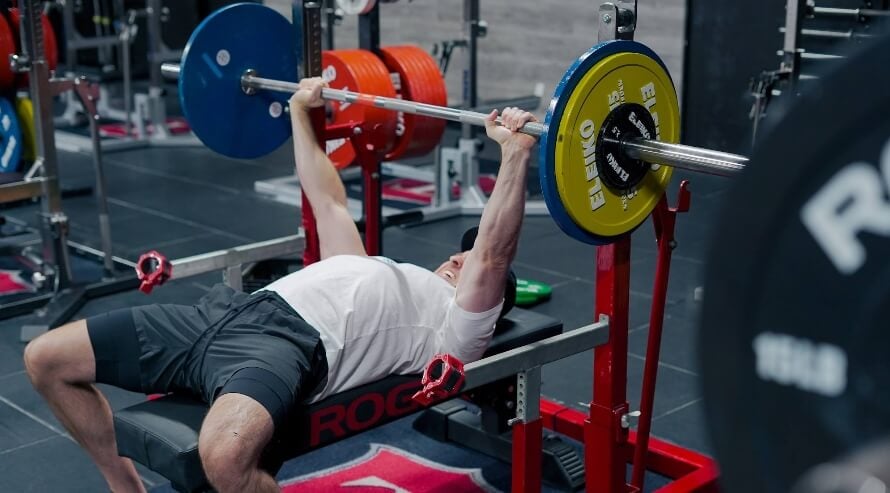
A minimalist workout only works if you focus on the right things. Here are some evidence-based guidelines:
Prioritize Compound, Bilateral Exercises
Exercises like squats, presses, deadlifts, and rows train multiple muscle groups at once and allow you to lift the heaviest weights possible, which gives you more results for the time you invest.
They’re also more time-efficient than unilateral exercises. With something like a Bulgarian split squat, you have to train each leg separately to complete a single set. With a squat, you train both sides of your body simultaneously.
Using a barbell also tends to be faster than using dumbbells, since setup, loading, and re-racking are simpler and require less moving around.
Cover the Main Movement Patterns
Make sure you cover all the main movement patterns across the week. This includes:
- Horizontal upper-body push
- Horizontal upper-body pull
- Vertical upper-body push
- Vertical upper-body pull
- Squat
- Hip hinge
You don’t need to do all of these in every workout, but you should cover them across your weekly training to ensure balanced development.
Train Close to Failure
When you’re doing fewer sets overall, you have fewer opportunities to stimulate muscle growth, and that means you have to make every set count.
Research shows that muscle growth tends to increase as sets are taken closer to failure, so to get the most out of each set, you should train close to failure.
In most cases, taking your sets to within 1–2 reps of failure is a good target.
Use Your Rest Time Efficiently
To perform well, you generally need to rest around 2–3 minutes between sets of smaller exercises and up to 3–5 minutes between sets of heavy compound lifts. The problem is that this makes workouts time-consuming.
One of the most effective ways to reduce total workout time is to use supersets—specifically by pairing exercises that train different muscle groups.
For example, you can alternate between exercises that train opposing muscle groups, like the bench press and pull-up, or unrelated ones, like the leg press and overhead press.
This allows one muscle group to recover while you train another, effectively reducing the amount of time you spend resting.
Research shows this can cut your total workout time by around 40% without reducing strength or muscle gain.
That said, it’s usually best to avoid supersetting squats or deadlifts, since they’re demanding on your whole body and can make it harder to maintain your performance on whichever exercise you pair with them.
Cut Unnecessary Extras
Long, complicated warm-ups, stretching routines, and mobility drills can add a lot of time without improving your results. In most cases, a couple of lighter warm-up sets of your first exercise are enough to prepare your body.
Because many exercises overlap in the muscles they train, you often don’t need to fully warm up again for every movement that follows—especially if they use similar muscle groups.
For instance, if your first exercise is a back squat and your second is a Romanian deadlift, you don’t need to warm up for the RDL since your glutes, hamstrings, and lower back are already primed after squatting.
Use Advanced Techniques Strategically
Finally, use advanced techniques where they make sense. Methods like rest-pause training or Myo reps are a good fit for minimalists because they help you increase training volume and intensity in less time.
However, I only recommend using them for isolation exercises, which are less fatiguing and easier to perform safely than compound exercises.
A Simple 2-Day Full-Body Minimalist Workout Routine
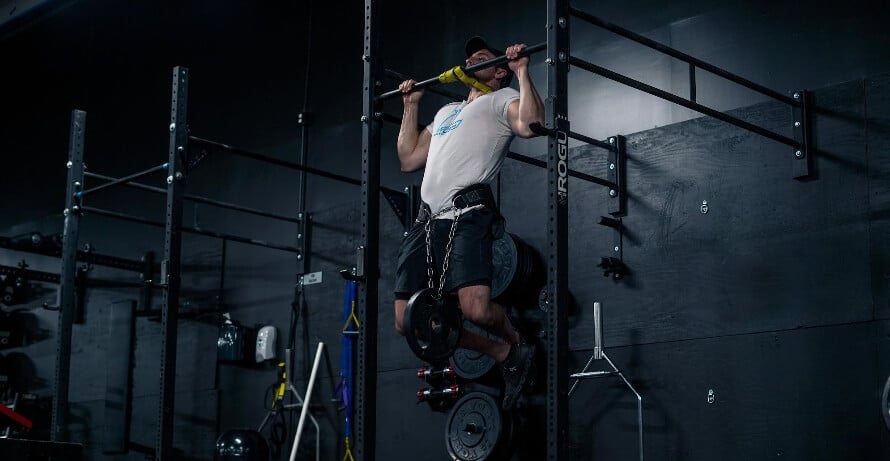
If you only have a small amount of time to train each week, this evidence-based minimalist full-body workout routine will help you build muscle, gain strength, and stay healthy.
Most people can complete each workout in about 30–40 minutes.
How to Use This Routine
Perform Workout 1 and Workout 2 once per week on non-consecutive days (e.g., Monday and Thursday).
Exercises labeled A and B are performed as supersets:
- Do one set of exercise A
- Then immediately do one set of exercise B
- Then rest for the prescribed time
This means you only rest after completing both exercises, which significantly reduces your total workout time without reducing performance.
Workout #1
1. Barbell Back Squat: 3 sets | 4–6 reps | 3–5 min rest
2A. Barbell Bench Press: 3 sets | 4–6 reps
2B. Barbell Row: 3 sets | 4–6 reps
Rest 2–3 minutes after each superset
3A. Romanian Deadlift: 3 sets | 4–6 reps
3B. Overhead Press: 3 sets | 4–6 reps
Rest 2–3 minutes after each superset
Workout #2
1. Barbell Deadlift: 3 sets | 4–6 reps | 3–5 min rest
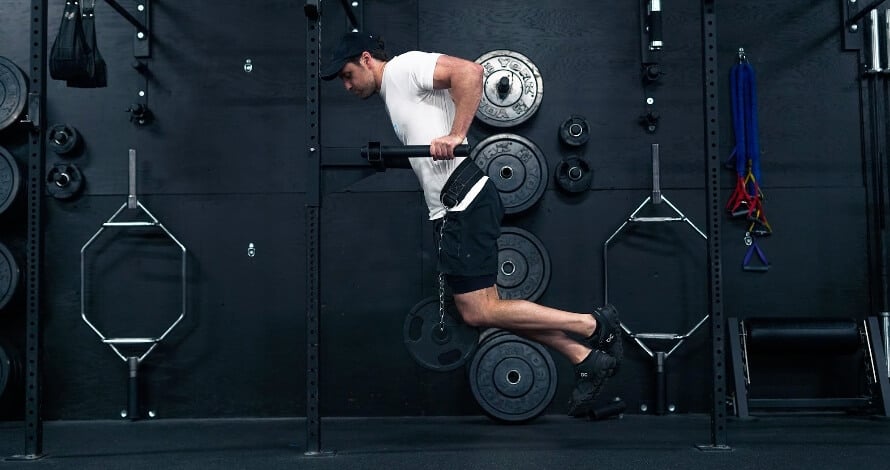
2A. Dip: 3 sets | 4–6 reps
2B. Pull-up: 3 sets | 4–6 reps
Rest 2–3 minutes after each superset
3A. Leg Press: 3 sets | 4–6 reps
3B. Dumbbell Side Lateral Raise: 3 sets | 6–8 reps
Rest 2–3 minutes after each superset
How Many Days Per Week Should You Do a Minimalist Workout?
For most people, two workouts per week is the sweet spot. It gives you enough volume (sets) to build muscle and strength at a steady pace, while still keeping your time commitment low.
That’s why the routine above is structured as a 2-day program.
If you have less time than that, you can still make progress with just one workout per week. Research shows you can maintain muscle—and in some cases even build it, especially if you’re new to training—with very low training volumes.
In that case, simply perform Workout 1 once per week.
If you have more time, you can train more often—but that starts to move away from a minimalist approach. In most cases, you’re better off sticking with two well-structured workouts and focusing on getting stronger over time.
Who Is a Minimalist Workout Best For?
A minimalist workout is best for people who want results—but don’t want to organize their lives around the gym. If you’re short on time, have an unpredictable schedule, or don’t enjoy long workouts, this approach makes it easier to stay consistent.
And consistency matters more than almost anything else for building muscle, gaining strength, and improving your health.
It’s also a good fit if fitness isn’t your top priority. Most people want to make progress without sacrificing time for work, family, or other commitments—and a minimalist workout allows that.
That said, it’s not ideal if your goal is to maximize muscle growth as quickly as possible. But if your goal is to get solid results with the least time investment, you can’t beat it.
The Bottom Line on Minimalist Workout
You don’t need to spend hours in the gym each week to build muscle, gain strength, and improve your health. Research shows you can make meaningful progress with far less training than most people think—provided you focus on the right exercises, train hard, and stay consistent.
That said, minimalist training isn’t the fastest way to build muscle. Doing more work—up to a point—will usually produce better results. But for most people, the goal isn’t to maximize every possible gain. It’s to get good results in a way that fits into their life.
And that’s exactly what a minimalist workout does.
It helps you do the least amount of work needed to make meaningful progress—and stick with it long enough to see results.
FAQ #1: Do minimalist workouts work for beginners?
Yes—minimalist workouts work very well for beginners.
In fact, beginners typically need less training volume to build muscle and strength, which makes a minimalist approach especially effective.
FAQ #2: Can you build muscle with a minimalist workout?
Yes, you can build muscle with a minimalist workout.
Research shows you can make significant muscle gains with relatively low training volume, especially if you train close to failure, focus on compound exercises, and get progressively stronger over time.
That said, higher-volume training generally produces faster results.
FAQ #3: Is a minimalist workout the same as a 2-day full-body workout?
Not necessarily. A minimalist workout is a way of training that focuses on doing the least amount of work needed to make progress.
A 2-day full-body routine is one way to apply that approach, but you can structure minimalist training in different ways.
FAQ #4: How long should a minimalist workout take?
Well-designed minimalist workouts should take about 30–40 minutes. The exact length depends on how many exercises you do and how efficiently you move between sets, but the goal is to get the most results in the least amount of time.
Want More Content Like This?
Check out these articles:
- The PHUL Workout Routine: Complete 4-Day Program Guide
- The Complete Guide to the Doggcrapp Training Program
- The Complete Guide to the PHAT Workout Program
The post Minimalist Workouts: How to Build Muscle in Less Time appeared first on Legion Athletics.
https://ift.tt/fBCM0yE March 20, 2026 at 06:28PM Legion Athletics


Comments
Post a Comment