Mom Pooch: What Causes It and How to Get Rid of It
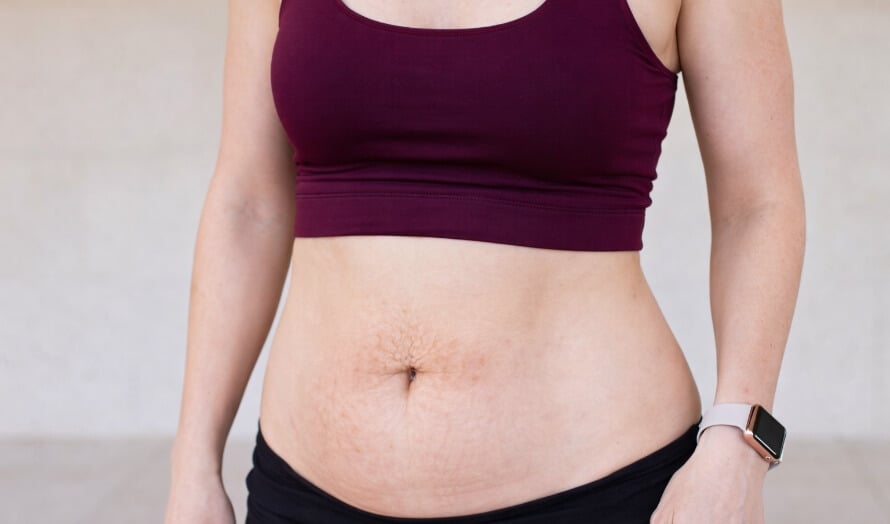
Many women feel frustrated by a lingering “mom pooch” after pregnancy and wonder why their lower belly won’t go back to how it was before.
If you look online, most advice makes getting your pre-pregnancy belly back sound simple: just do a few ab exercises each week and it will flatten out.
That might help a little—but it’s rarely enough.
A mom pooch is usually caused by more than weak abs, and fixing it requires more than crunches.
In this article, you’ll learn what actually causes a mom pooch—and the comprehensive approach you need to get rid of one.
Key Takeaways
- A mom pooch usually isn’t just fat—it’s typically a combination of stretched tissue, body fat, muscle separation, posture, and sometimes scar tissue.
- The more of these factors that are present, the more noticeable it becomes—and the less likely it is that a single intervention will solve it.
- For most women, the biggest improvements come from rebuilding core strength, gaining full-body muscle, managing body fat, and giving their body time.
- Quick fixes like crash dieting or so-called “mom pooch workouts” rarely help and often make progress slower, not faster.
- If excess body fat is a major factor, certain supplements—like caffeine, yohimbine, and a fat burner—may help accelerate progress.
- What Is a Mom Pooch?
- Why Do I Have a Mom Pooch?
- How to Fix a Mom Pooch (What Works for Most People)
- What to Avoid if You’re Trying to Get Rid of a Mom Pooch
- Supplements to Help Lose a Mom Pooch
- Does a Mom Pooch Ever Go Away?
- When to Consider Physical Therapy or Procedures
- Common Misconceptions About the Mom Pooch
- The Bottom Line on Mom Pooch
- FAQ #1: How to fix a mommy pooch?
- FAQ #2: Is mommy pooch fat or skin?
- FAQ #3: Can walking help get rid of mom pooch?
- Want More Content Like This?
Table of Contents
+What Is a Mom Pooch?
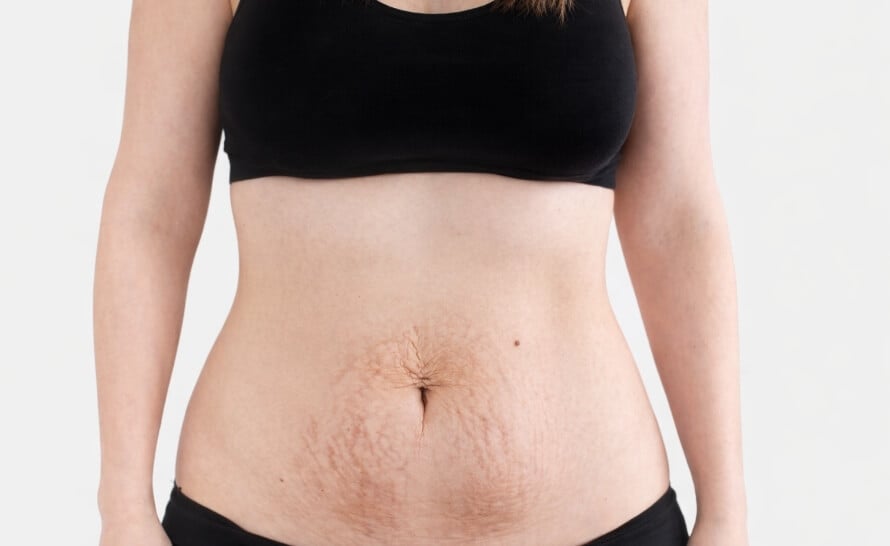
“Mom pooch” is a catch-all term for a rounded or more prominent lower belly that can appear in women after they give birth—something that’s very common, especially after multiple pregnancies.
It isn’t dangerous, but many women want to reduce it for comfort or aesthetic reasons.
Why Do I Have a Mom Pooch?
A mom pooch usually isn’t caused by just one thing. It’s typically the result of several changes that happen during pregnancy and postpartum recovery.
Pregnancy stretches your abdominal wall for months. After delivery, those tissues don’t always snap back to exactly how they were. For some women they recover quickly. For others, they remain looser, which changes how the lower stomach sits.
Activity levels also matter.
Pregnancy and postpartum life can be a perfect storm for less movement: you’re tired, your schedule is chaotic, and your workouts often get bumped by more urgent things (like sleep). But when you move less for long enough, your body fat levels can creep up unless you also lower your calorie intake.
If your body naturally stores more fat in the lower abdomen, that’s often where you’ll notice that change first.
Another major factor is diastasis recti (ab separation), which is when the two halves of the rectus abdominis (your “six-pack” muscles) are farther apart than usual. When that happens, the abdominal wall has less tension, and the stomach can appear more rounded or protrude more easily—even if body fat is relatively low.
Genetics plays a role, too. Some women naturally store more fat in their hips and thighs (classic pear-shaped physique), while others store more in their midsection. Pregnancy doesn’t create those patterns, but it can make them more noticeable if body fat increases.
In some cases, C-section scar tissue can also affect how the lower abdomen looks. Scar tissue can slightly change how skin and connective tissue lie across the lower stomach, which can create a small ledge or shelf-like appearance above the scar.
Posture is another piece of the puzzle.
Many new moms naturally push their hips forward and tuck their butt under when carrying a newborn. This doesn’t cause a mom pooch, but if it becomes a habit, it can make one look more pronounced.
In other words, a mom pooch is almost never just one thing. It’s usually the result of several factors overlapping—and the more of them you have, the more noticeable it tends to be.
How to Fix a Mom Pooch (What Works for Most People)

Because so many factors can contribute to a mom pooch, there’s rarely a single fix.
For most women, the solution requires a comprehensive approach that tackles all the potential causes. Often, that means:
- Rebuilding core strength
- Increasing activity and overall muscle mass
- Reducing excess body fat
- Improving posture
Here’s what that looks like in practice.
Deep Core, Pelvic Floor, and Breathing Work
Deep core, pelvic floor, and breathing work are essential for regaining the core strength lost during pregnancy and childbirth. Unlike most ab exercises, they rebuild tension across the abdominal wall without straining the connective tissue along the midline.
That matters because once you can generate that tension consistently, you can safely progress to more challenging training that strengthens your core without stressing the tissues you’re trying to restore.
If you want a step-by-step progression—including exactly how to do the drills and when to advance—see our full guide to diastasis recti exercises here:
Diastasis Recti Exercises: How to Fix Ab Separation Safely
Strength Training
Once you’ve rebuilt foundational core strength, the next step is full-body strength training.
Training all your major muscle groups improves your overall shape, supports better posture, and makes your body more resilient. It strengthens the muscles that help you lift, carry, bend, and play—so everyday tasks like holding your child or getting up off the floor feel easier.
It also helps protect your joints and reduces the strain placed on your lower back and hips, which often take on extra stress during pregnancy and early motherhood.
On top of that, it helps you maintain a healthy body composition in a few practical ways:
- A muscular body burns more calories resting and moving than a similarly-sized undermuscle one.
- Muscle supports good metabolic health, which is vital for maintaining a healthy body fat percentage.
- Strength training even alters the expression of certain genes that accelerate fat burning.
In other words, lifting weights doesn’t just change how you look—it changes the conditions that make it easier to stay in good shape.
To maximize these effects, follow a well-designed workout routine that prioritizes compound exercises and progressive overload (getting gradually stronger over time).
These principles are behind most of the fat-loss and body-composition benefits of lifting weights.
To understand why—and get a plan that puts this into practice—check out this article:
How to Use Strength Training for Weight Loss
Walking
Walking isn’t a magic fix for a mom pooch—but it’s useful.
Regular walking:
- Increases daily energy expenditure
- Supports fat loss
- Improves recovery
- Reduces stress
For many postpartum women, it’s also realistic and sustainable—which is often what matters most.
At Legion, we’ve seen firsthand how consistently increasing daily steps can meaningfully contribute to fat loss and improve how the midsection looks—especially when combined with strength training and a calorie-controlled diet.
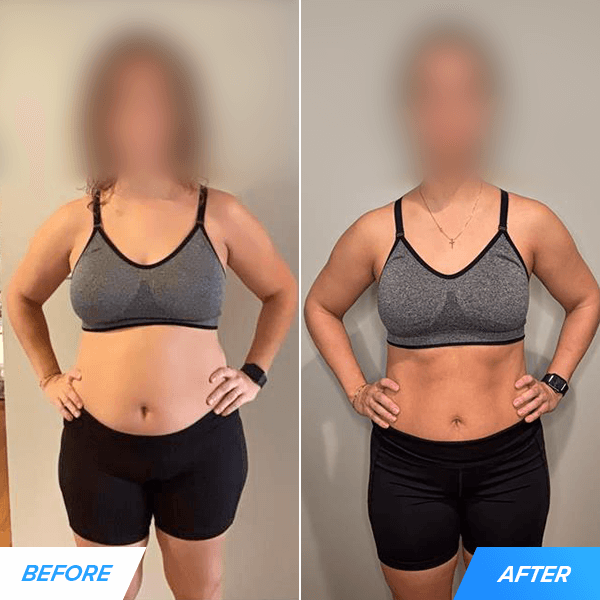
For example, one client joined our body transformation coaching program 5 weeks postpartum and focused on these fundamentals: consistent strength training, daily steps, and a cutting diet. In 12 weeks, she lost nearly 20 pounds and dramatically improved the look of her mom pooch:
What to Avoid if You’re Trying to Get Rid of a Mom Pooch
Just as important as what to do is what not to do. Here’s what to avoid.
Crash Dieting
Slashing your calorie intake might reduce body fat quickly, but it also makes it harder to build or maintain muscle. And since muscle is one of the biggest tools you have for improving your shape and long-term fat loss, extreme dieting usually backfires.
To lose fat quickly without compromising muscle or health, aim for a daily calorie deficit of 20–25% (eat 20–25% fewer calories than you burn each day) and eat 0.8–1 gram of protein per pound of body weight per day.
That’s aggressive enough to see results—but sustainable enough to protect muscle.
Mom Pooch Workouts
So-called “mom pooch workouts” are generally just random selections of crunch variations, planks, and high-rep ab exercises thrown together because they feel like they target your belly.
However, like workouts for other “problem areas”—saddlebags (thigh fat), bat wings (upper arm fat), fat upper pubic area (FUPA)—you can’t spot reduce fat with targeted training. Equally, if stretched tissue or muscle separation is part of the issue, piling on more ab exercises won’t fix that either.
A more systematic approach works better.
First, rebuild strength and control in your deep core muscles so your abdominal wall can function properly.
Then, build full-body muscle with progressive strength training. That improves your overall shape, supports proper posture, and makes losing fat—and keeping it off—much easier.
Layer in realistic daily activity, stay consistent, and you’ll get far better results than bouncing between one-off mom pooch workouts.
Rushing the Process
Don’t expect overnight results. Your abdominal wall stretched over months. Tissue recovery, strength gains, and fat loss take time.
The women who see the best results aren’t the ones who do the most in a week—they’re the ones who do the right things consistently for months.
Supplements to Help Lose a Mom Pooch
If your mom pooch is largely caused by excess fat, the right supplements can help you lose it faster:
- Caffeine: 3–6 mg of caffeine per kilogram of body weight per day increases metabolic rate and helps you train harder while dieting.
- Yohimbine: 0.1–0.2 milligrams of yohimbine per kilogram of body weight before fasted training enhances fat loss.
- Fat Burner: Effective fat burners contain ingredients that boost the number of calories you burn and reduce hunger and cravings, making weight loss more straightforward.
And if you’d like to know exactly what other supplements you should take to reach any and all of your fitness goals, take the Legion Supplement Finder Quiz.
Does a Mom Pooch Ever Go Away?

Yes, you can often get rid of a mom pooch—but not always. It depends on what’s causing it.
If your mom pooch is mostly due to increased body fat, it can shrink as you lose fat. If it’s largely related to diastasis recti, it can improve over time—especially if you gradually rebuild core strength using the methods we discussed earlier.
And if posture is making your mom pooch look more pronounced, correcting it can change how your midriff appears, even without major changes in body fat.
That said, some contributing factors don’t fully reverse.
Stretched skin, connective tissue changes, or scar tissue may improve, but they likely won’t return to exactly how they were before pregnancy. In those cases, the goal usually isn’t to eliminate a mom pooch completely—it’s to make it less noticeable and improve how your midsection looks and functions
When to Consider Physical Therapy or Procedures
For many women, strength training, gradual fat loss, and patience are all that’s required to improve the look of their mom pooch. In other cases, more support is helpful.
If you suspect severe diastasis recti, pelvic floor dysfunction, or discomfort in your lower back, hips, or pelvis, working with a qualified physical therapist can be a smart next step.
They can assess how your body is functioning and guide you through exercises tailored to you, which is often more effective than trying to figure it out on your own.
Doctors usually consider medical procedures only when structural factors—like significant skin laxity—are the main cause. These procedures can change how the abdomen looks, but most experts treat them as last resorts rather than first-line options.
For most women, it makes sense to address the fundamentals first. If you’ve done that consistently and still aren’t seeing the changes you want, that’s when it may be worth exploring additional help.
Common Misconceptions About the Mom Pooch
One of the biggest misconceptions about a mom pooch is that it’s “just fat.”
Sometimes it is—but often it isn’t.
As we’ve covered, stretched connective tissue, diastasis recti, posture changes, and even scar tissue can all contribute. That’s why some women diet aggressively and still feel like their lower belly doesn’t change much—because body fat isn’t the only factor involved.
Another common myth is that if a mom pooch hasn’t disappeared a few months after giving birth, it never will.
That’s rarely true.
Losing a mom pooch takes time. But with the right approach—and enough consistency—most women can meaningfully improve how their midsection looks and functions.
The Bottom Line on Mom Pooch
A mom pooch isn’t a single problem with a single fix.
It’s usually the result of several overlapping factors—stretched tissue, body fat, muscle separation, posture, and sometimes scar tissue. The more of those that apply to you, the more noticeable it tends to be.
That’s why quick fixes don’t work.
The women who see the best results focus on the fundamentals:
- Rebuild core strength properly.
- Lift weights consistently.
- Manage body fat in a sustainable way.
- Give your body time to adapt.
In many cases, that’s enough to make a mom pooch significantly less noticeable. In others, improvement is still possible—even if “perfectly flat” isn’t realistic.
FAQ #1: How to fix a mommy pooch?
The most effective way to fix a mom pooch is to address the factors causing it.
For most women, that means rebuilding core strength, increasing muscle mass through strength training, reducing excess body fat if needed, and giving their body time to recover.
FAQ #2: Is mommy pooch fat or skin?
It can be either—or both.
Some mom pooches are mostly due to increased body fat in the lower abdomen. Others are mainly caused by stretched skin and connective tissue from pregnancy. Many are a combination of the two, sometimes alongside muscle separation or posture changes.
That’s why two women can look very different postpartum even if they weigh the same. The appearance depends less on body weight alone and more on which underlying factors are present.
FAQ #3: Can walking help get rid of mom pooch?
Walking can help, but it’s rarely enough on its own.
Regular walking increases daily energy expenditure, supports fat loss, improves recovery, and reduces stress—all of which can contribute to improving how your midsection looks. But walking doesn’t rebuild muscle or restore core strength by itself.
For best results, most women benefit from combining regular walking with strength training, appropriate calorie intake, and time for their body to adapt.
Want More Content Like This?
Check out these articles:
- Hips Dips: What Are They And How Do You Get Rid of Them?
- How to Fix “Mom Butt” After Pregnancy
- How to Get Rid of Armpit Fat & Bra Bulge Fast
The post Mom Pooch: What Causes It and How to Get Rid of It appeared first on Legion Athletics.
https://ift.tt/JuQ8CvR March 4, 2026 at 07:00PM Legion Athletics


Comments
Post a Comment