The Best Rear Delt Exercises for Strong, Balanced Shoulders

To develop full, proportional shoulders, you have to make rear delt exercises a priority.
Why?
Because most people spend plenty of time training their front and side delts with presses and side raises, but much less time building the back of their shoulders with rows, reverse flys, and the like.
Over time, this causes a “front-heavy” look that throws your upper body aesthetics out of whack.
What’s more, it can also increase your risk of shoulder injury, hinder your athletic performance, and cause your shoulders to hunch.
In this article, you’ll learn the best rear delt exercises for building strength and balance. You’ll also discover why they’re effective and get tips for making your rear delt workouts as productive as possible.
Key Takeaways
- Rear delt exercises help you build balanced shoulders, support shoulder health, improve your posture, and contribute to better performance on key exercises.
- The best rear delt exercises are the barbell and dumbbell row, regular and neutral-grip pull-up, neutral-grip pulldown, cable row, rear delt row, rear lateral raise, machine reverse fly, and face pull.
- To build bigger rear delts, train them two or three times per week with a mix of compound pulling exercises and rear delt isolation movements.
- To better feel your rear delts working during isolation exercises, focus on driving your elbows out and back and sweeping your arms outward in a wide arc.
- You don’t need supplements to build big rear delts, but a good pre-workout, creatine, and protein powder can help you train harder, recover better, and build muscle faster.
- Why Rear Delt Exercises Matter
- 10 Best Rear Delt Exercises for Size, Strength, and Control
- Supplements to Support Rear Delt Training
- How to Feel Your Rear Delts Working
- How Often Should You Train Rear Delts?
- The Bottom Line on Rear Delt Exercises
- FAQ #1: What are the best rear delt dumbbell exercises?
- FAQ #2: What are the best cable rear delt exercises?
- FAQ #3: How do you isolate the rear delts?
- FAQ #4: What rep range should you use for rear delt exercises?
- Want More Content Like This?
Table of Contents
+Why Rear Delt Exercises Matter
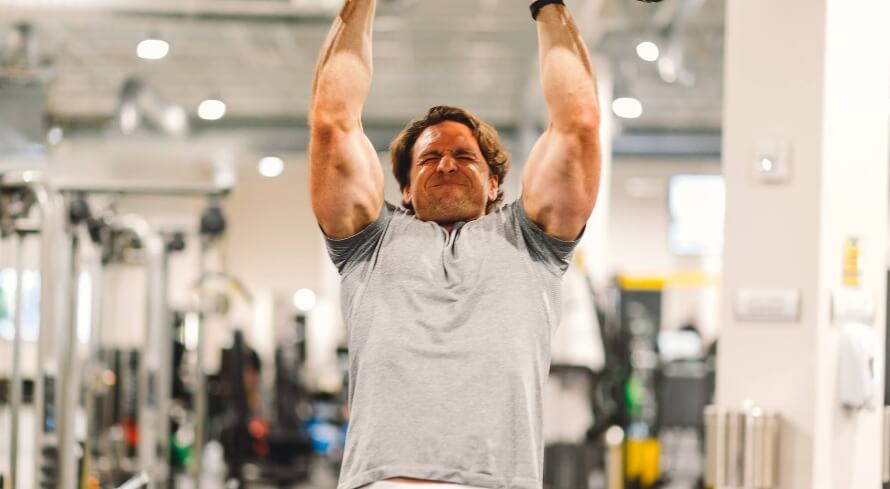
Rear delt exercises do more than round out your shoulders.
They help keep your shoulders healthy, improve posture, and support better performance on big lifts like the squat, bench press, and deadlift.
Proportional Muscle Growth
The rear delts are smaller and often more stubborn than the front and side heads of the deltoids. Because of this, they sometimes need a bit of extra attention if you want them to grow at roughly the same rate as the rest of your shoulders.
If you rely only on pressing exercises and general upper-body training, your front and side delts usually receive more stimulation than your rear delts. Including dedicated rear delt exercises helps ensure your shoulder development stays balanced and proportional.
Improved Shoulder Health
Many lifters spend far more time training their front and side delts with pressing exercises than they do training their rear delts with pulling movements.
Over time, this can create a strength and size imbalance between the front and back of the shoulder. Strengthening your rear delts with effective rear delt exercises helps maintain better muscular balance around the shoulder joint, which may reduce your risk of injury.
Better Performance on Key Exercises
The rear delts work alongside the other upper back muscles to help you stay upright in the squat, keep your back flat in the deadlift, and create a solid base in the bench press.
Strengthening them helps you lift heavier weights on these exercises, which means you build more full-body muscle and strength over time.
Improved Posture
Weak rear delts often accompany the rounded-shoulder posture many people develop from sitting and spending long hours at a computer.
Strengthening them with effective rear delt exercises helps you to pull your shoulders back and prevents excessive upper back rounding.
10 Best Rear Delt Exercises for Size, Strength, and Control
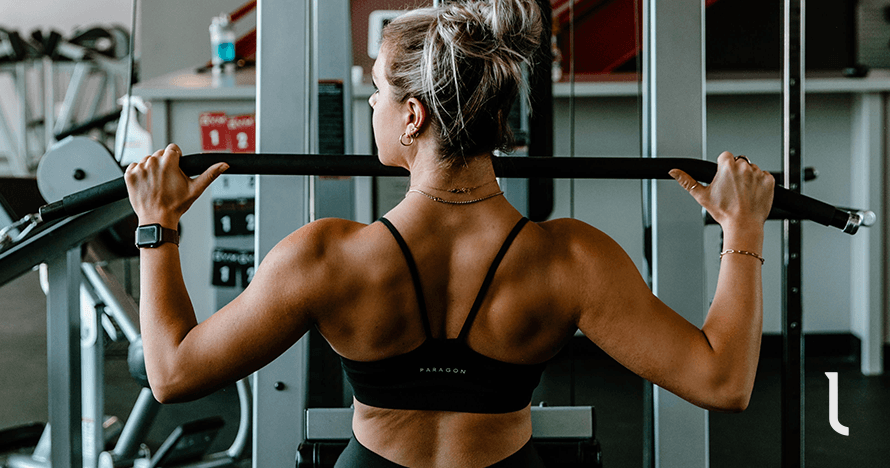
The most effective rear delt exercises fall into two categories:
- Heavy pulling movements that train the entire upper back and allow you to lift a lot of weight, and
- Isolation movements that target the rear delts more directly.
Both matter.
Heavy compound exercises help you build overall back strength and load the rear delts with progressively heavier weights. Isolation movements train the rear delts through their primary function—moving your arms outward and backward—which helps ensure they grow in proportion with the rest of your shoulders.
The exercises below combine both approaches.
Make them the foundation of your rear delt workouts and focus on gradually increasing the weight or reps over time.
1. Barbell Row
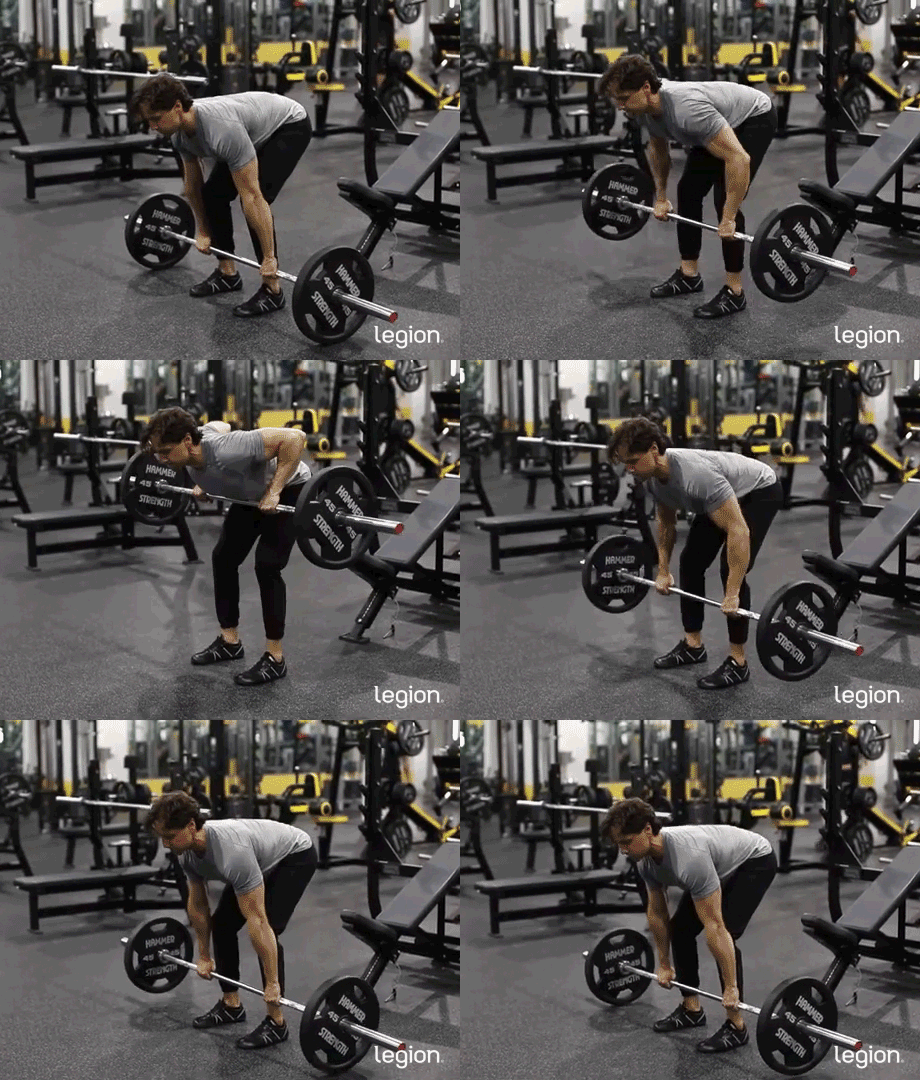
Why: The barbell row is one of the best rear delt exercises because, as you pull the bar toward your torso, your rear delts help drive your elbows behind your body. It also allows you to train your upper back with heavier weights than most isolation exercises, which makes it highly effective for building stronger, thicker rear delts over time.
How to:
- Stand with your feet shoulder-width apart and hold a loaded barbell with a slightly wider-than-shoulder-width grip.
- Bend at the hips until your torso is close to parallel with the floor and let the bar hang at arm’s length.
- Pull the bar toward your torso, touching it between your lower chest and upper stomach.
- Reverse the movement and return to the starting position.
Expert Tip: If your grip fails before your back muscles, try using lifting straps. These secure your hands to the barbell, ensuring your back muscles—not your grip—are the limiting factor.
READ MORE: The 12 Best Barbell Row Variations You Can Do
2. One-Arm Dumbbell Row
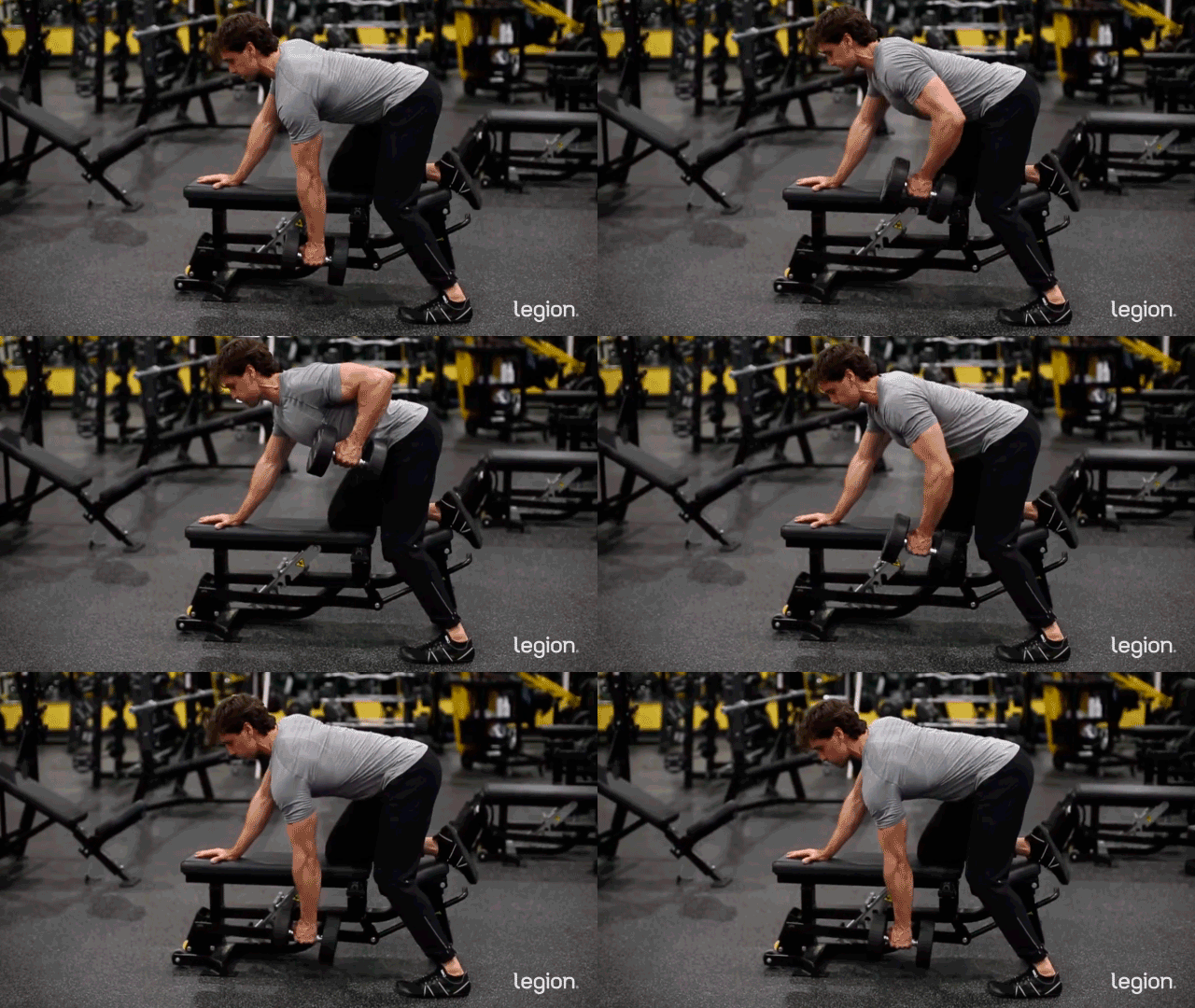
Why: The one-arm dumbbell row is a highly effective rear delt exercises that trains each side of your body independently. This helps you find and fix muscle imbalances that can hamper your performance and make your physique look lopsided.
How to:
- Hold a dumbbell in your right hand.
- Place your left knee and hand on a bench, with your right foot planted on the floor 1–2 feet away, and let your right arm hang straight down.
- Keep your back straight and pull the dumbbell toward your torso, then lower it back to the starting position.
- Complete the desired number of reps, then switch to your left arm and repeat.
Expert Tip: The one-arm dumbbell row gets harder as you lift the weight higher, making it tough to finish reps even if the start feels easy. This can cause you to stop your set before fully stimulating your back and rear delts.
To fix this, use a little momentum to help lift the weight through the full range of motion. This ensures you complete more full reps and build more muscle and strength over time.
READ MORE: How to Do the Bent-Over Dumbbell Row
3. Pull-up
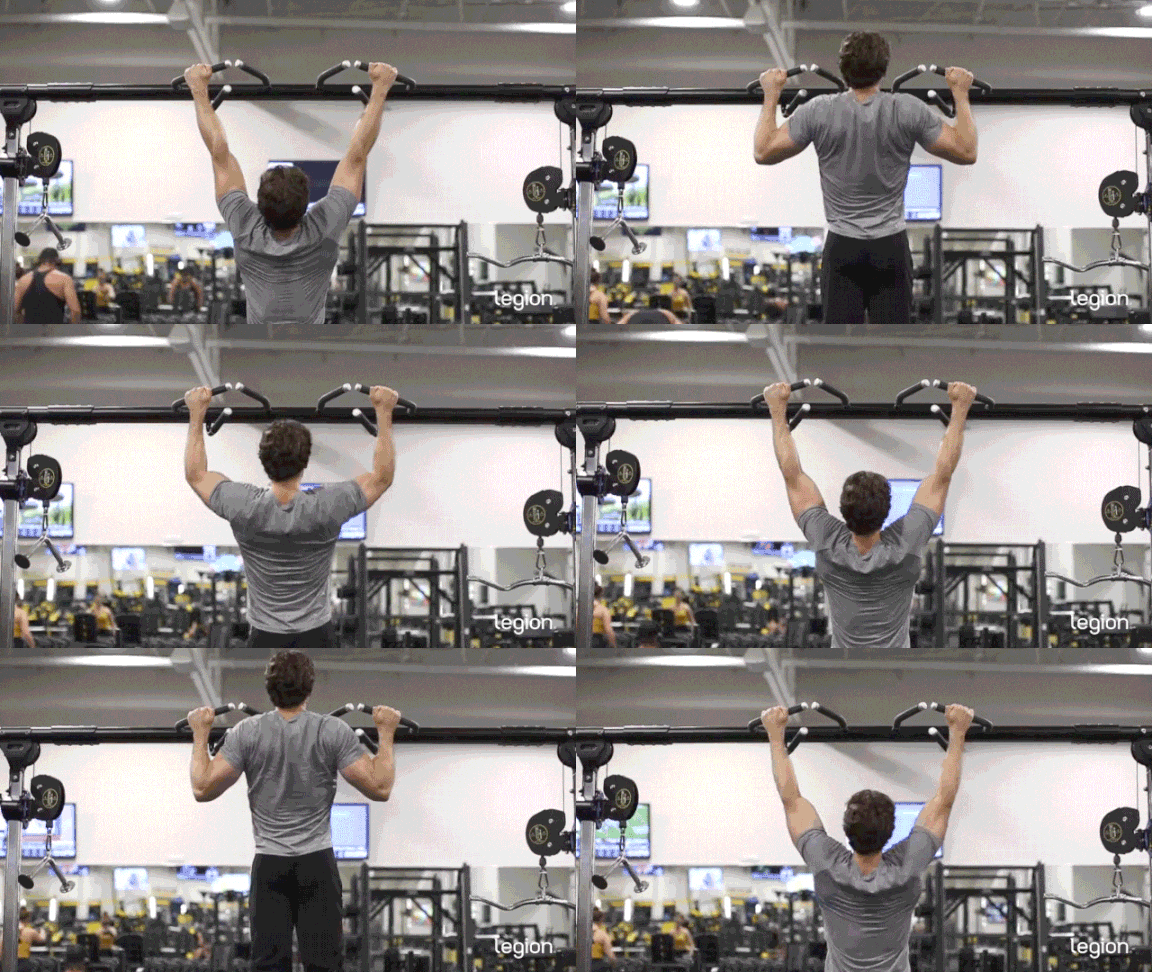
Why: Many gymgoers don’t realize it, but pull-ups work your rear delts to a high-degree. They’re also a very scalable exercise, making them ideal for applying progressive overload. Beginners can start with assisted pull-ups, then progress to the bodyweight version, and eventually tackle weighted pull-ups as they get stronger.
How to:
- Grab a pull-up bar slightly wider than shoulder-width apart with your palms facing away from you.
- Lift your feet so that you’re hanging with your arms straight.
- Pull your body up until your chin is above the bar.
- Reverse the movement and return to the starting position.
Expert Tip: Pulling yourself up with enough force to “smash” your chest into the bar helps you attack each rep with the intensity you need to get your chin over the bar.
READ MORE: How to Do Your First Pull-up with Proper Form
4. Close-Grip Lat Pulldown
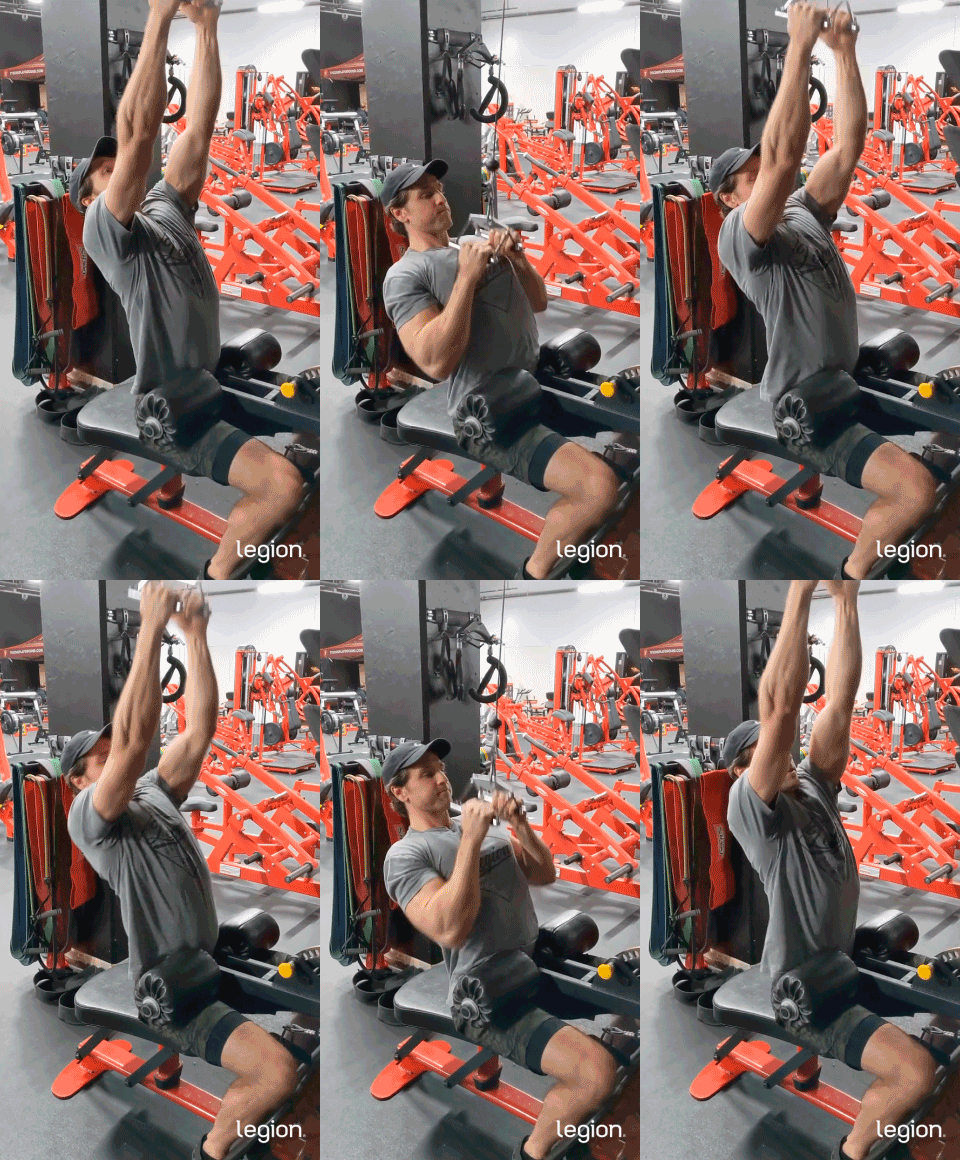
Why: Research shows that the close-grip lat pulldown trains the rear delt slightly better than other pulldown variations, which is why it’s the variation I recommend you include in your rear delt workouts. That said, if you can’t or don’t want to do this variation, the regular-grip or pronated-grip versions are viable alternatives.
How to:
- Adjust the thigh pad to lock your lower body in place.
- Stand up, grab the handle, and sit down while keeping your grip and arms straight. Let your weight pull the bar down, then position your thighs under the pads and plant your feet.
- Pull the bar toward your chest.
- Once the bar is under your chin, return it to the starting position.
Expert Tip: To ensure your elbows are driving downward and you’re engaging your back muscles and rear delts effectively, imagine slamming your elbows into the floor.
READ MORE: Close-Grip Lat Pulldown: Form, Benefits & Variations
5. Neutral-Grip Pull-up
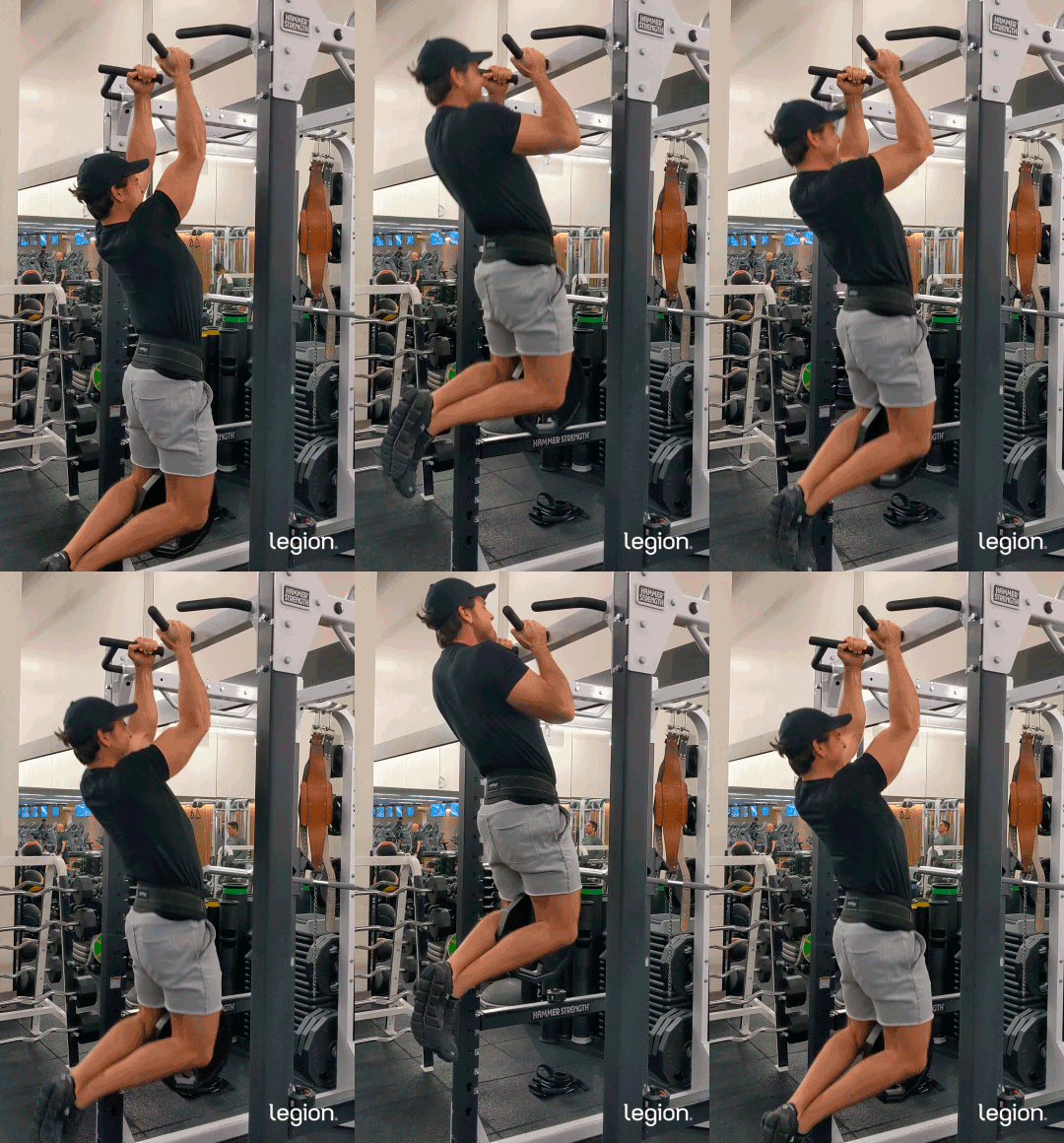
Why: The neutral-grip pull-up is another excellent bodyweight rear delt exercise. Its grip mimics the close-grip lat pulldown, which, as we’ve seen, may be slightly better for targeting the rear delts than other grip orientations.
How to:
- Grab a pull-up bar with your hands around shoulder-width apart and your palms facing toward you.
- Lift your feet so that you’re hanging with your arms straight.
- Pull your body up until your chin is above the bar.
- Reverse the movement and return to the starting position.
Expert Tip: As you tire, resist the urge to swing your legs to generate momentum. Instead, brace your core, arch your back, and squeeze your glutes. Doing so makes the movement more efficient and ensures the target muscles are doing the work.
6. Seated Cable Row
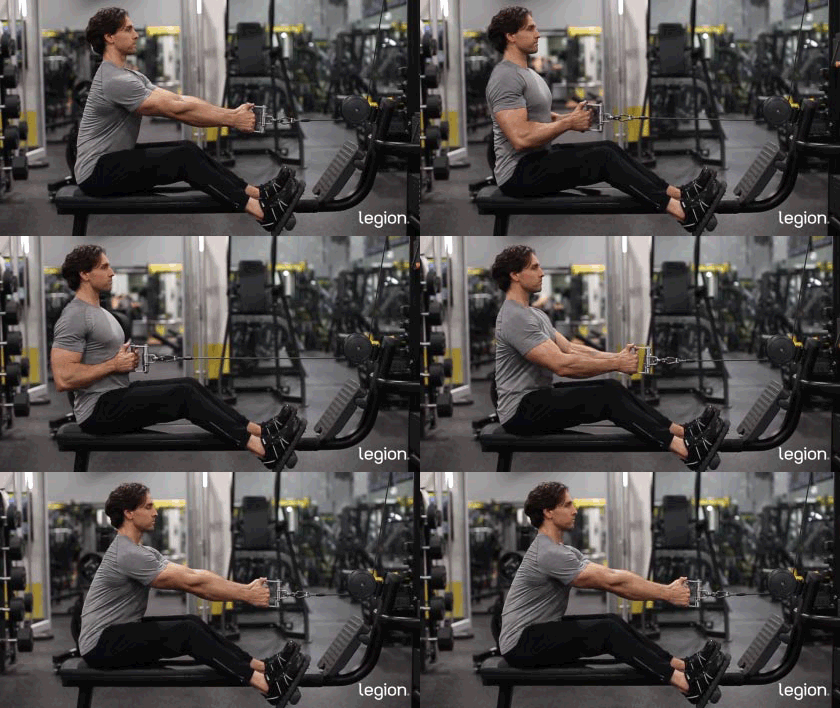
Why: Cable rear delt exercises, like the seated cable row, keep constant tension on your muscles throughout each rep, which offers a different challenge compared to free weights. This adds variety and intensity to your rear delt workouts, which likely aids growth.
How to:
- Sit down and place your feet on the foot-rest while maintaining slightly bent knees.
- Lean forward and grab the handle, then lean back with your arms stretched in front of you.
- Straighten your back and pull the cable toward your stomach.
- Once your hands touch your torso, reverse the movement and return to the starting position.
Expert Tip: To train your rear delts through the largest range of motion possible, let the cable pull your shoulder blade apart and round your upper back at the bottom of each rep. Then, as you pull, drive your shoulder blades together and lean slightly back as you row the handle toward your torso.
READ MORE: How to Do the Seated Cable Row: Muscles Worked, Form, and Alternatives
7. Barbell Rear Delt Row
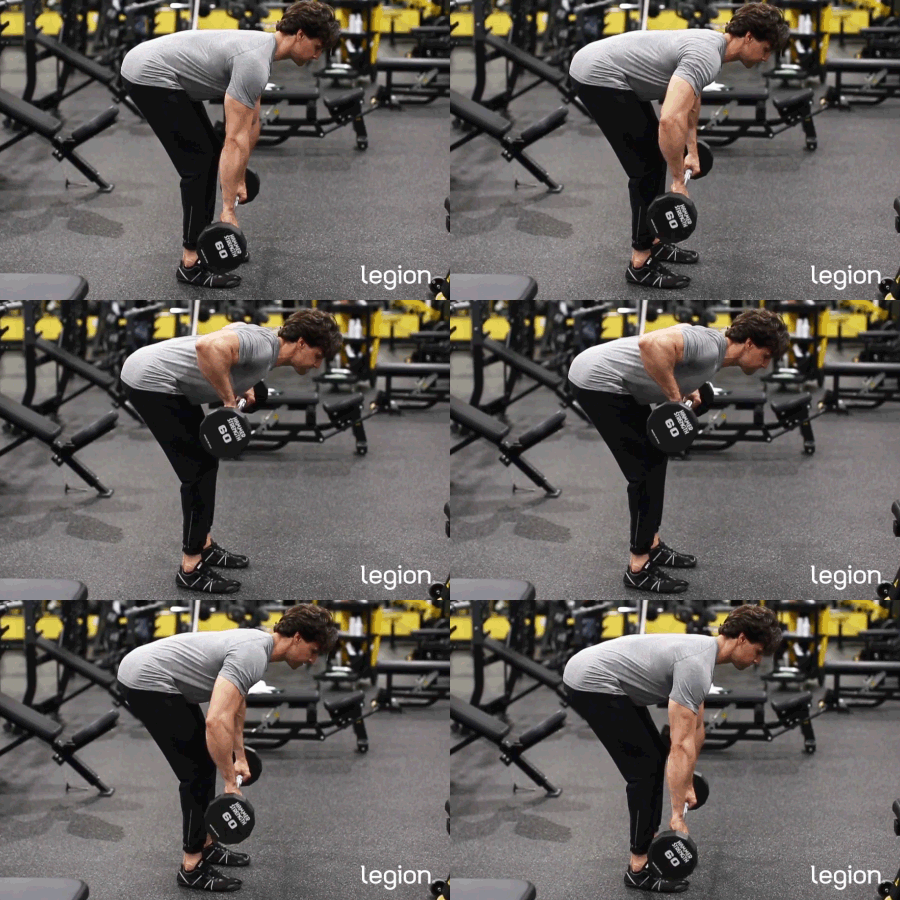
Why: The barbell rear delt row is similar to the barbell row except that you pull the weight to your mid chest instead of your stomach. This reduces the amount your lats contribute to the exercise and makes it more taxing on your rear delts.
How to:
- Stand with your feet shoulder-width apart under a loaded barbell, toes slightly pointed outward.
- Bend over and grip the bar just wider than shoulder-width, palms facing you.
- Straighten your back and lift your hips until your back is parallel to the floor.
- Pull the barbell to your mid chest, making sure to flair your elbows at about a 60-degree angle relative to your body.
- Reverse the movement and return to the starting position.
Expert Tip: With the regular barbell row, you aim to keep your elbows tucked around 8–10 inches from your sides, but with the rear delt row, allow your elbows to flare further, almost until they are perpendicular to your torso.
READ MORE: How to Do the Rear Delt Row: Benefits, Form, & Alternatives
8. Dumbbell Rear Lateral Raise
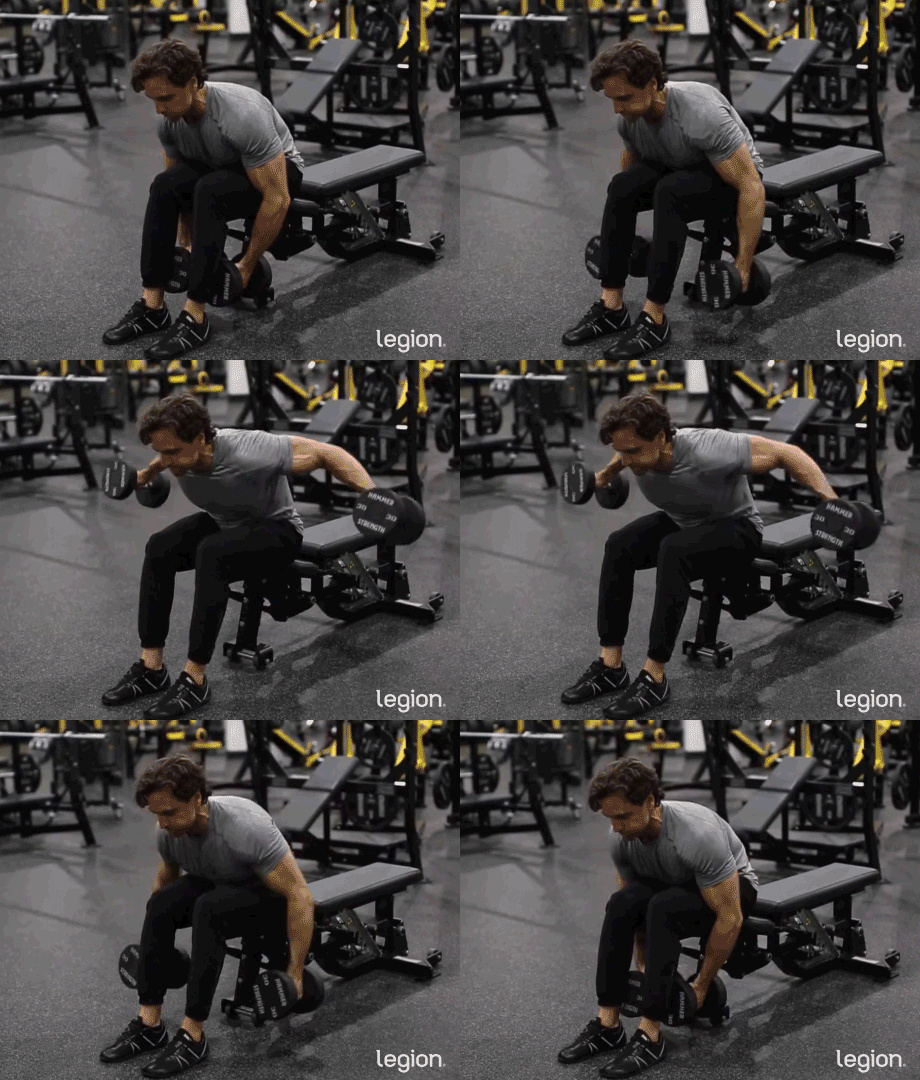
Why: The dumbbell rear lateral raise is a top-tier dumbbell rear delt exercise because it trains your rear delts’ primary function: horizontal shoulder abduction (moving your arms from out in front of you out to your sides). That’s why all the most effective posterior deltoid training includes the dumbbell rear lateral raise.
How to:
- Whether standing or seated, bend at the hips so that your upper body is as close to parallel to the floor as possible.
- Hold a dumbbell in each hand, and while keeping your back flat and a slight bend in your elbows,, lift the dumbbells out to the side until your upper arm is parallel to the floor.
- Reverse the movement and return to the starting position.
Expert Tip: Some people find it challenging to balance when they perform the rear lateral raise standing. If that’s the case for you, perform it sitting on the edge of a bench.
READ MORE: How to Do the Dumbbell Rear Lateral Raise: Form, Benefits, & Variations
9. Machine Reverse Fly
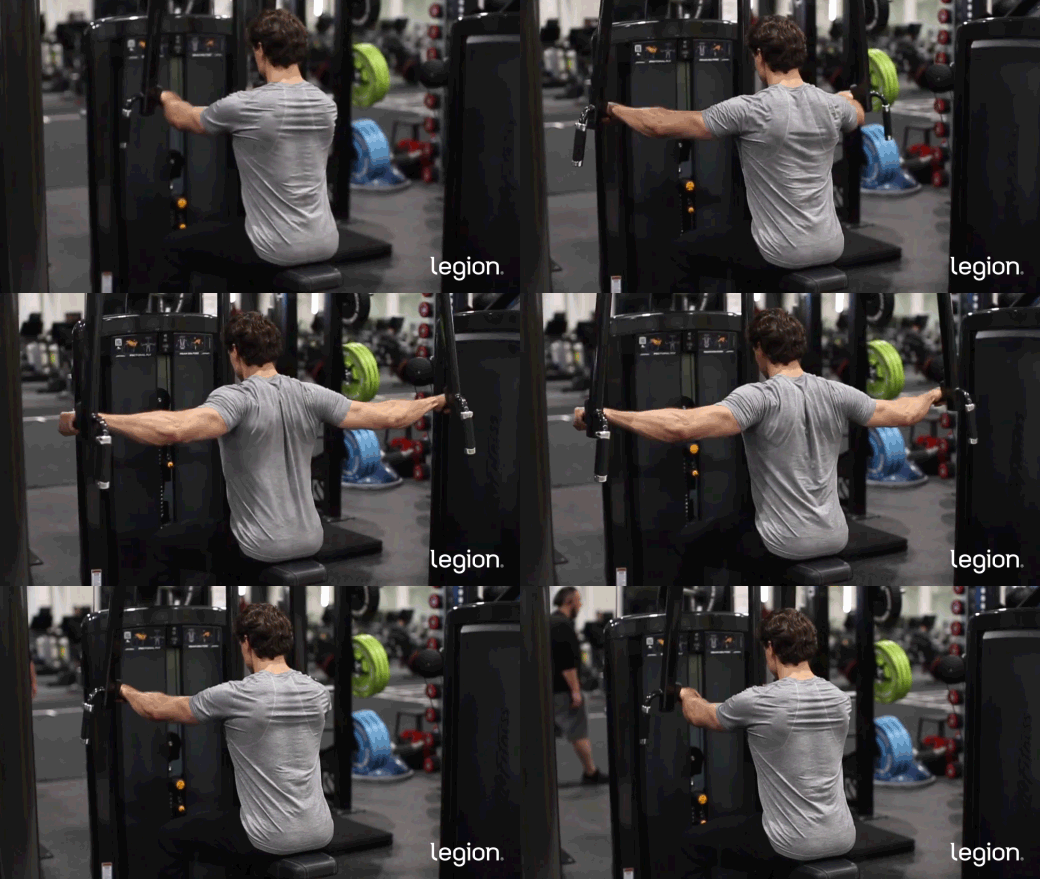
Why: Research shows the machine reverse fly activates the rear delts more than exercises like the seated cable row and lat pulldown. This doesn’t necessarily mean it’s more effective than these exercises for developing your rear delts (especially since you can use far less weight with the machine reverse fly), but it’s a solid indication that it’s worth including in your rear delt workouts.
How to:
- Sit facing the machine with your feet firmly planted and the handles at shoulder height.
- Grab the handles with your palms facing down and press your chest against the pad.
- With a slight bend in your elbows, pull the handles back in an arc until your arms are straight out to the sides or slightly behind your body.
- Reverse the movement and return to the starting position.
Expert Tip: Many people shorten the range of motion during the machine reverse fly. To avoid this, let your hands come as close together as possible at the bottom of each rep and drive your elbows slightly past your torso at the top.
READ MORE: Machine Reverse Fly: Alternatives, Muscles Worked & Form
10. Face Pull
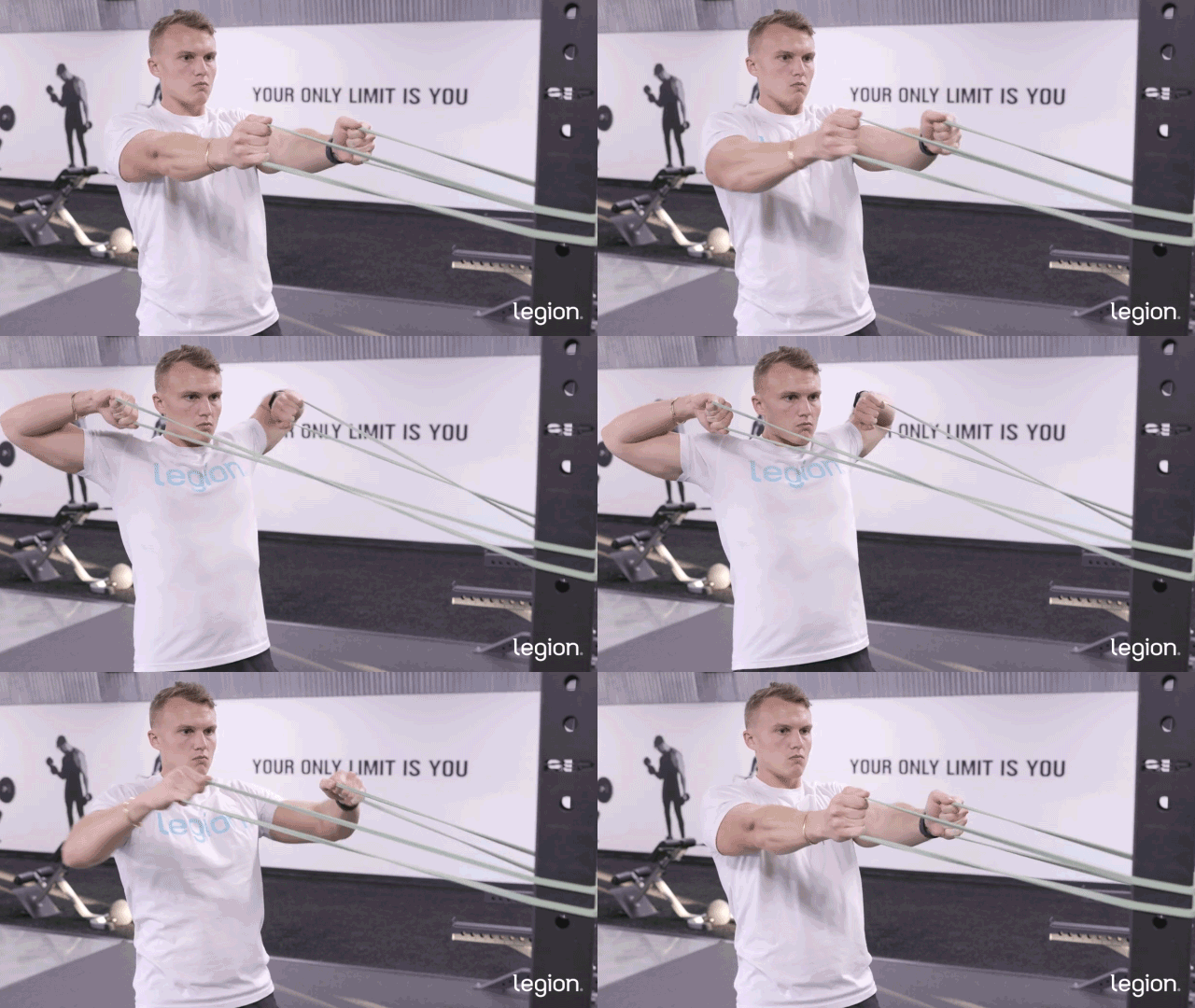
Why: The face pull trains all the muscles responsible for pulling horizontally toward your face (including the rear delts) and strengthens the shoulder muscles that rotate your arm upward. These benefits are unique to the face pull and may help you build stronger, more robust shoulders.
How to:
- Set the pulley on a cable machine to eye level and attach a rope handle.
- Grab one end of the rope in each hand and step back until the cable is taut and your arms are stretched out in front of you.
- Stand upright with a slight bend in your knees and your feet shoulder-width apart.
- Keeping your elbows high, pull the rope toward your eyes, spreading the rope apart until your hands are above your shoulders.
- Reverse the movement and return to the starting position.
Expert Tip: You don’t need to use heavy weights to make face pulls effective. In fact, lifting too much often makes them less effective because it tempts you to rely on momentum instead of good form. Stick to the 8–10 or 10–12 rep range to build muscle and strength while keeping your technique clean and controlled.
READ MORE: How to Do the Face Pull: Benefits, Form, & Alternatives
Supplements to Support Rear Delt Training
You don’t need supplements to build big rear delts, but the right ones can help. Here are three worth considering:
- Protein powder: Eating enough protein is essential for building muscle. Protein powders like Whey+, Casein+, and Egg+ make hitting your target easier.
- Creatine: Creatine boosts muscle and strength gain, improves endurance, and reduces muscle damage and soreness. For a natural source of creatine, try Legion’s creatine monohydrate powder, creatine gummies, creatine capsules, or post-workout Recharge.
- Pre-workout: A quality pre-workout helps you train harder by boosting energy, focus, and athletic performance. Legion’s Pulse is available with or without caffeine.
Want even more specific supplement advice? Take the Legion Supplement Finder Quiz to learn exactly what supplements are right for you.
How to Feel Your Rear Delts Working
When you’re performing heavy compound exercises like rows or pull-ups, you usually don’t need to worry too much about feeling your rear delts working. As long as you train through a full range of motion with proper form, your rear delts naturally help move the weight.
Isolation exercises are a little different.
While you don’t need to feel your rear delts for them to be working, many lifters like having that “mind-muscle connection” because it reassures them they’re targeting the muscle they’re trying to train.
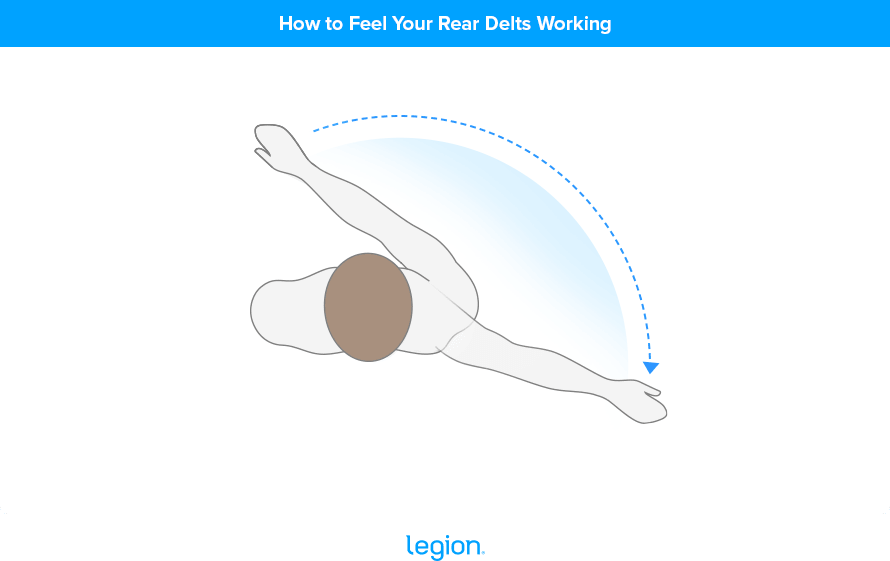
One way to improve that connection is to focus on how your elbows move, rather than simply pulling the weight toward your body. Instead of keeping your elbows close to your sides, think about driving them out and back, slightly away from your torso.
Another helpful cue is to imagine your arms are sweeping across a large area in front of you, like you’re trying to cover as much ground as possible with each rep.
Reach forward to stretch your rear delts, then sweep your arms outward in a wide arc rather than pulling them inward. This encourages you to move through a larger range of motion and keeps the emphasis on your rear delts instead of your traps.
Here’s an illustration to help you visualize this:
How Often Should You Train Rear Delts?
If your goal is to build bigger rear delts, training them two or three times per week is a good rule of thumb.
In practice, that means doing pull-ups, pulldowns, and rows two to three workouts per week, and isolation exercises like rear lateral raises or reverse flies in at least one of those workouts.
READ MORE: The Best Training Frequency for Building Muscle (According to 20 Studies)
The Bottom Line on Rear Delt Exercises
Most people don’t train their rear delts enough, even though they play an important role in shoulder balance, posture, and performance on major lifts.
To develop them properly, include a mix of compound pulling movements like rows and pull-ups and isolation exercises like rear lateral raises and face pulls in your workouts two or three times per week. Over time, this helps build stronger, thicker, more proportional shoulders.
FAQ #1: What are the best rear delt dumbbell exercises?
The best rear delt dumbbell exercises are the one-arm dumbbell row and the dumbbell rear lateral raise.
The one-arm dumbbell row lets you train your rear delts with heavy weights alongside your upper back muscles, while the rear lateral raise targets the rear delts more directly. Using both gives you a good mix of heavy loading and isolation work.
FAQ #2: What are the best cable rear delt exercises?
The best cable rear delt exercises are the seated cable row and the face pull. The seated cable row lets you train your rear delts with heavy weights, while the face pull trains the rear delts more directly and also strengthens the muscles that support shoulder health. Including both makes your rear delt training more balanced.
FAQ #3: How do you isolate the rear delts?
To isolate your rear delts, use exercises that train their main job: horizontal shoulder abduction—moving your arms from straight out in front of you in an arc until they’re back behind your body.
Good options include the dumbbell rear lateral raise, machine reverse fly, and face pull. To keep the emphasis on your rear delts, think about driving your elbows out and back and sweeping your arms outward in a wide arc.
FAQ #4: What rep range should you use for rear delt exercises?
A good rule of thumb is to do most compound rear delt exercises, like rows and pull-ups, with heavier weights and lower reps (e.g., 4–6 reps) and most isolation exercises, like rear lateral raises and face pulls, with moderate weights and moderate reps (e.g., 6–8 or 8–10 reps).
What matters most is using a weight that lets you train with good form, push close to failure, and progressively get stronger over time.
Want More Content Like This?
Check out these articles:
- The Top 10 Best Side Delt Exercises
- Best Front Deltoid Exercises for Mass
- The Ultimate Shoulder Workout: The Best Shoulder Exercises for Big Delts
The post The Best Rear Delt Exercises for Strong, Balanced Shoulders appeared first on Legion Athletics.
https://ift.tt/T2jiUYO March 12, 2026 at 06:00PM Legion Athletics


Comments
Post a Comment