The PHUL Workout Routine: Complete 4-Day Program Guide
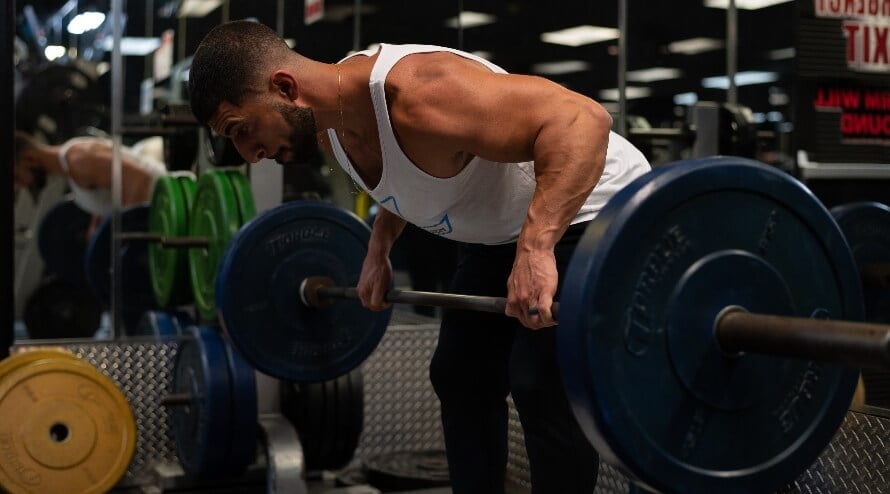
The PHUL workout is a 4-day training split designed to help you build strength and muscle at the same time.
Unlike many workout programs that focus mainly on either strength or hypertrophy, the PHUL workout routine combines heavy, low-rep compound lifting with higher-rep muscle-building work across the week.
In this guide, you’ll learn how the PHUL workout works, what the full routine looks like, and how to adapt it to fit your schedule and goals.
Key Takeaways
- PHUL stands for Power Hypertrophy Upper Lower. It’s a 4-day workout split designed to build strength and muscle at the same time.
- The PHUL workout program trains each major muscle group twice per week using two power workouts and two hypertrophy workouts.
- PHUL works well for intermediate lifters who want a balance of strength and muscle growth, but it isn’t ideal if your goal is to maximize either one.
- The program centers around compound exercises like the squat, deadlift, bench press, and overhead press, while allowing more flexibility with accessory work.
- If you can’t train four days per week, you can adapt the PHUL workout split to a 3-day schedule.
- What Is the PHUL Workout?
- Is the PHUL Workout Effective for Building Strength and Muscle?
- Who Should Use the PHUL Program?
- How the 4-Day PHUL Workout Split Works
- The 4-Day PHUL Workout Routine
- How to Get the Best Results from the PHUL Workout
- Pros and Cons of the PHUL Workout
- PHUL vs PHAT: What’s the Difference?
- 3-Day PHUL Workout Split
- Supplements That Support Your Progress on PHUL
- The Bottom Line on the PHUL Workout Split
- FAQ #1: Are PHUL workouts effective?
- FAQ #2: What is the PHUL training method?
- FAQ #3: Is the PHUL workout good for beginners?
- Want More Content Like This?
Table of Contents
+What Is the PHUL Workout?
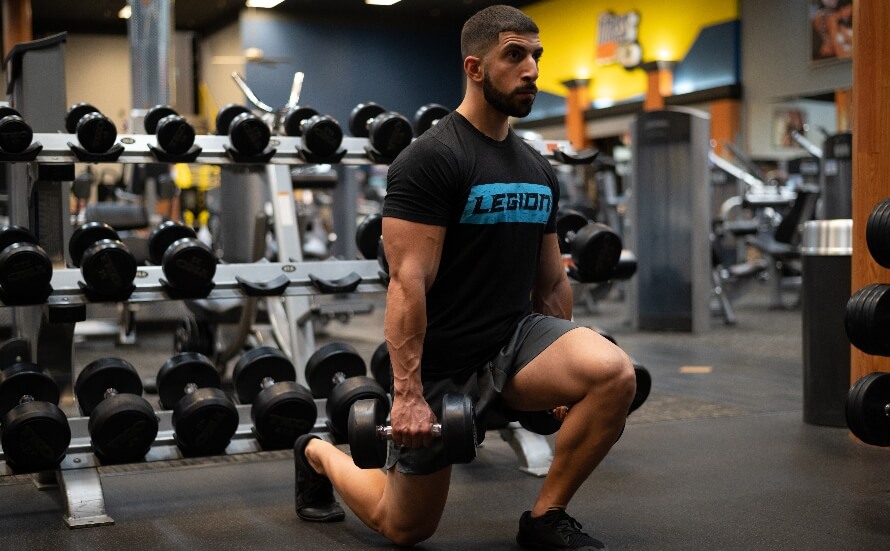
PHUL stands for “power hypertrophy upper lower,” and it refers to a 4-day workout split designed to help you build strength and muscle. You do four workouts per week on PHUL: two upper-body and two lower-body workouts.
Two of these workouts (one upper-body and one lower-body workout) are geared toward gaining strength (power), while the others focus on building muscle (hypertrophy).
A typical PHUL workout schedule looks like this:
- Day 1: Upper-Body Power
- Day 2: Lower-Body Power
- Day 3: Rest
- Day 4: Upper-Body Hypertrophy
- Day 5: Lower-Body Hypertrophy
- Day 6: Rest
- Day 7: Rest
Is the PHUL Workout Effective for Building Strength and Muscle?
Yes—PHUL is an effective workout routine for building both strength and muscle, especially if you have some lifting experience and want to improve both at the same time.
One reason it works well is that it combines two types of training that support different goals. On the power days, you lift heavier weights in lower rep ranges, which is ideal for gaining strength. On the hypertrophy days, you do more total volume with moderately heavy weights, which is better for building muscle.
This structure is similar to a training approach known as daily undulating periodization (DUP), where you do the same exercises multiple times per week using different rep ranges—from low-rep strength work to higher-rep hypertrophy work.
Research shows that DUP-style training is highly effective for improving muscle growth, strength, and muscular endurance.
PHUL isn’t a perfect example of DUP because you don’t repeat exactly the same exercises several times weekly. However, the movements overlap enough that many of the same principles still apply.
PHUL is also effective because it has you train each major muscle group twice per week. Research shows this is a good approach for gaining size and strength because it makes it easier to do more high-quality training than when you work out less often.
Another benefit of the PHUL workout split is that it centers around compound exercises like the squat, deadlift, bench press, and overhead press. These exercises train a lot of muscle mass at once, make progressive overload easier to apply, and give you more return for the time you spend in the gym.
That said, PHUL isn’t ideal if your goal is to specialize completely in either strength or hypertrophy.
Because it’s designed to improve both at the same time, it doesn’t let you devote all your training resources to maximizing one or the other.
In other words, if your main goal is to get as strong as possible, a pure strength program is usually better. And if your main goal is to build as much muscle as possible, a hypertrophy-focused program is usually the better choice.
But if you want to get stronger and build muscle at the same time, PHUL strikes a decent balance. It combines heavy strength work, muscle-building volume, and a practical training frequency in a way that suits many intermediate lifters.
Who Should Use the PHUL Program?
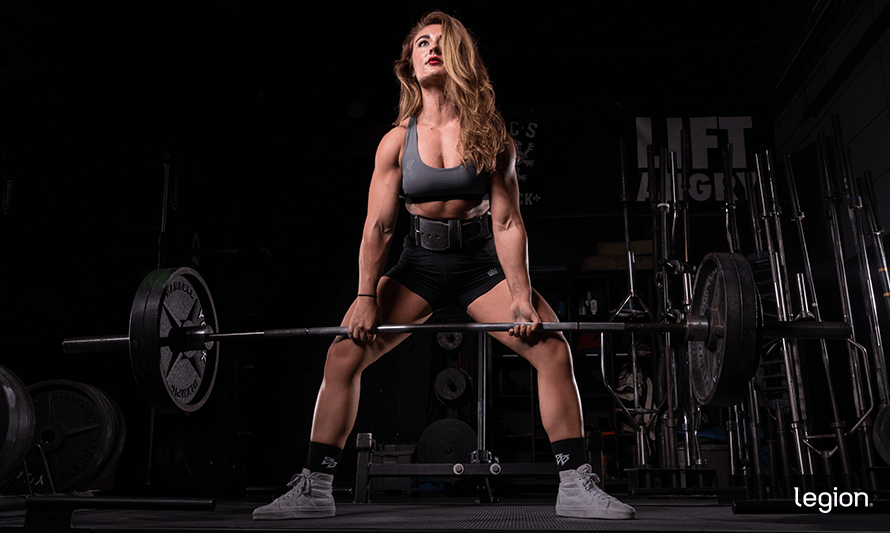
The PHUL program works best for intermediate and advanced weightlifters who want to build strength and muscle at the same time.
It’s a good fit for people who enjoy heavy compound exercises like the squat, deadlift, bench press, and overhead press and can recover from four challenging workouts per week.
PHUL isn’t ideal for beginners, who usually make faster progress with simpler routines. And if your goal is to maximize either strength or muscle growth, a more specialized program is usually the better option.
How the 4-Day PHUL Workout Split Works
The PHUL workout is organized into four weekly training sessions: two focused on strength (power) and two focused on hypertrophy (muscle growth).
The power workouts come earlier in the week and emphasize heavier weights and lower rep ranges to improve maximal strength. The hypertrophy workouts come later in the week and involve slightly lighter weights and higher rep ranges to increase training volume and stimulate muscle growth.
The split is also organized around upper- and lower-body training. This lets you train each major muscle group twice per week while giving your muscles enough time to recover between workouts.
In practice, this means you’ll complete one upper-body power workout, one lower-body power workout, one upper-body hypertrophy workout, and one lower-body hypertrophy workout each week.
The 4-Day PHUL Workout Routine
Below is the original 4-day PHUL workout split. Perform the exercises in the order listed, resting 2–3 minutes between most sets unless otherwise noted.
Upper-Body Power Workout
- Barbell Bench Press: 3–4 sets | 3–5 reps | 3–5 min rest
- Incline Dumbbell Bench Press: 3–4 sets | 6–10 reps | 2–3 min rest
- Barbell Bent-Over Row: 3–4 sets | 3–5 reps | 3–5 min rest
- Lat Pulldown: 3–4 sets | 6–10 reps | 2–3 min rest
- Overhead Press: 2–3 sets | 6–10 reps | 2–3 min rest
- Skullcrusher: 2–3 sets | 6–10 reps | 2–3 min rest
- Barbell Curl: 2–3 sets | 6–10 reps | 2–3 min rest
Lower-Body Power Workout
- Barbell Back Squat: 3–4 sets | 3–5 reps | 3–5 min rest
- Barbell Deadlift: 3–4 sets | 3–5 reps | 3–5 min rest
- Leg Press: 3–5 sets | 10–15 reps | 2–3 min rest
- Seated Leg Curl: 3–4 sets | 6–10 reps | 2–3 min rest
- Seated Calf Raise: 4 sets | 6–10 reps | 2–3 min rest
Upper-Body Hypertrophy Workout
- Incline Barbell Bench Press: 3–4 sets | 8–12 reps | 2–3 min rest
- Flat Dumbbell Fly: 3–4 sets | 8–12 reps | 2–3 min rest
- Seated Cable Row: 3–4 sets | 8–12 reps | 2–3 min rest
- One-Arm Dumbbell Row: 3–4 sets | 8–12 reps | 2–3 min rest
- Dumbbell Side Lateral Raise: 3–4 sets | 8–12 reps | 2–3 min rest
- Incline Dumbbell Curl: 3–4 sets | 8–12 reps | 2–3 min rest
- Triceps Pushdown: 3–4 sets | 8–12 reps | 2–3 min rest
Lower-Body Hypertrophy Workout
- Front Squat: 3–4 sets | 8–12 reps | 2–3 min rest
- Lunge: 3–4 sets | 8–12 reps | 2–3 min rest
- Leg Extension: 3–4 sets | 10–15 reps | 2–3 min rest
- Lying Leg Curl: 3–4 sets | 10–15 reps | 2–3 min rest
- Dumbbell Side Lateral Raise: 3–4 sets | 8–12 reps | 2–3 min rest
- Seated Calf Raise: 3–4 sets | 8–12 reps | 2–3 min rest
- Leg Press Calf Raise: 3–4 sets | 8–12 reps | 2–3 min rest
How to Get the Best Results from the PHUL Workout
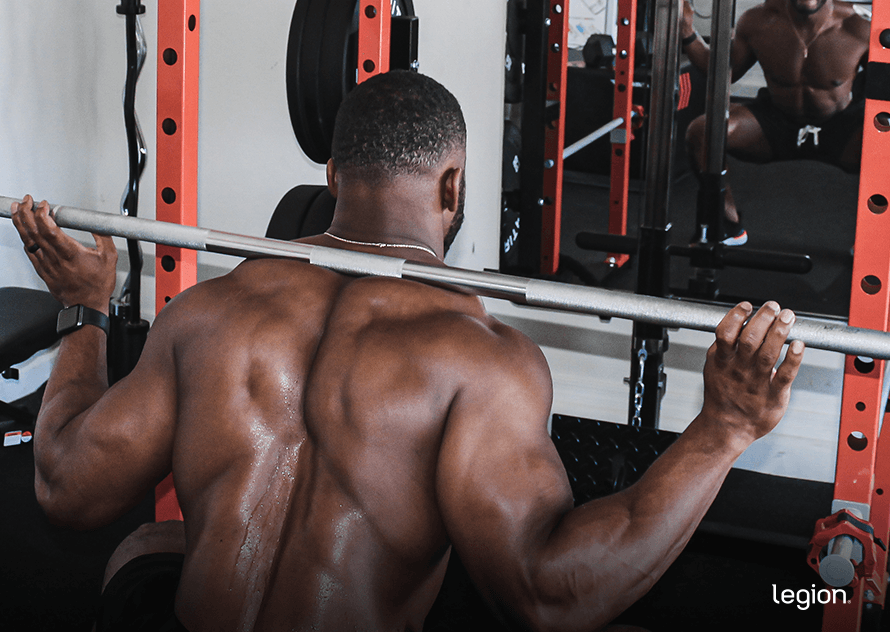
Now that you know what the PHUL workout routine looks like, here are a few guidelines to help you run the program effectively and get the best results from it.
Sets and Reps
Each exercise includes a set range and a rep range—for example, 3–4 sets of 3–5 reps. Start with the lowest number of sets when you begin the program, then gradually add sets as you gain strength.
Use the rep range to help you choose appropriate weights. Pick a weight that lets you train close to failure while staying within the target rep range on all your sets. When you can hit the top of the range on every set, increase the weight in the following week’s workout by 5–10 pounds.
For example, if your PHUL workout calls for 4 sets of 3–5 reps of the bench press, and you do 5 reps in all 4 sets, add 10 pounds when you perform the bench press the following week.
Training Close to Failure
Training to failure means reaching the point where you can’t complete another rep with good form despite giving maximum effort. On the PHUL workout routine, avoid reaching failure on most sets—leave at least one rep in the tank at the end of each set.
To gauge how close you are to this point, ask yourself at the end of each set: “If I had to, how many more reps could I have done with good form?”
If the answer is more than one or two, increase the weight or reps on your next set.
Exercise Selection
The squat, deadlift, bench press, and overhead press form the foundation of the PHUL program. Don’t swap them out unless an injury or lack of equipment prevents you from doing them.
You can replace accessory or isolation exercises if needed—just make sure your substitutions target the same muscles and serve a similar purpose as the original.
Ab Training
Train your abs at the end of your workouts or on rest days—whichever fits your schedule best.
Just bear in mind that PHUL workouts contain a lot of compound exercises that indirectly train your abs, especially the squat, deadlift, and overhead press, so direct ab work isn’t always necessary. But if you want to include it, feel free to do so.
Pros and Cons of the PHUL Workout

Like most training programs, the PHUL workout has several advantages as well as a few potential drawbacks. Understanding both can help you decide whether it’s the right routine for your goals and schedule.
Pros
The main advantages of the PHUL workout routine are:
- Balance: You train every major muscle group twice per week, which ensures you don’t neglect any part of your body and helps you build a well-rounded, aesthetic physique.
- Variety: Each week includes both power and hypertrophy workouts, giving you a mix of heavy strength training and high-rep muscle-building work, which may boost your results more than less varied training.
- Frequency: Training each muscle group twice a week is more effective for gaining muscle and strength than once-a-week training.
- Simple: The PHUL program has a simple structure, which makes it more enjoyable and easier to stick with long term.
- High-Quality Training: Because PHUL spreads volume across multiple sessions, you avoid exhausting any one muscle group in a single workout. And that boosts recovery and helps you perform better in subsequent workouts.
Cons
The PHUL workout isn’t without downsides. Here are the main drawbacks:
- Long Workouts: Each session includes multiple compound and isolation exercises, which can make workouts time-consuming—especially on hypertrophy days.
- Not Specialized: Because PHUL is designed to build both strength and muscle at the same time, it doesn’t allow you to fully specialize in either goal.
- Intensity: The PHUL workout is perfect for people who like to push their limits, but it can be overkill for many.
- Not Beginner-Friendly: PHUL includes more volume than beginners need to make progress. It also involves a lot of heavy, free-weight training, which may be overwhelming for some new weightlifters.
PHUL vs PHAT: What’s the Difference?
PHUL (Power Hypertrophy Upper Lower) and PHAT (Power Hypertrophy Adaptive Training) are both training programs that combine strength and hypertrophy work, but they differ mainly in their weekly structure and overall training volume.
PHUL runs over four workouts per week and balances strength-focused sessions with hypertrophy training. PHAT typically uses a five-day schedule and includes more total training volume, especially for hypertrophy.
Because of this, PHUL is generally easier to recover from and simpler to follow, while PHAT is a more demanding routine that’s usually better suited for experienced lifters who want to emphasize muscle growth.
3-Day PHUL Workout Split
If you can’t commit to four workouts per week, this 3-day PHUL variation lets you scale the program down without sacrificing its core principles.
To run PHUL on a 3-day schedule, keep the same workout order but spread the four sessions over two weeks. You’ll train three days per week, alternating through the original 4-day split.
Week 1
- Day 1: Upper-Body Power
- Day 2: Rest
- Day 3: Lower-Body Power
- Day 4: Rest
- Day 5: Upper-Body Hypertrophy
- Day 6: Rest
- Day 7: Rest
Week 2
- Day 1: Lower-Body Hypertrophy
- Day 2: Rest
- Day 3: Upper-Body Power
- Day 4: Rest
- Day 5: Lower-Body Power
- Day 6: Rest
- Day 7: Rest
Continue cycling through the workouts in this pattern for as long as you run the program.
Supplements That Support Your Progress on PHUL
If you follow the PHUL workout split, consider these three supplements to maximize growth, train hard, and recover faster:
- Protein powder: Eating enough protein is essential for building muscle. Protein powders like Whey+, Casein+ and Egg+ make hitting your target easier.
- Creatine: Creatine boosts muscle and strength gain, improves anaerobic endurance, and reduces muscle damage and soreness. For a natural source of creatine, try Legion’s creatine monohydrate powder, creatine gummies, creatine capsules, or post-workout Recharge.
- Pre-workout: A quality pre-workout helps you train harder by boosting energy, focus, and athletic performance. Legion’s Pulse is available with or without caffeine.
Want even more specific supplement advice? Take the Legion Supplement Finder Quiz to learn exactly what supplements are right for you.
The Bottom Line on the PHUL Workout Split
The PHUL workout split is a well-rounded 4-day program that helps you build strength and muscle at the same time.
By combining two power workouts with two hypertrophy workouts each week, it gives you enough heavy compound training to get stronger and enough higher-rep volume to build muscle. It also trains each major muscle group twice per week, which is one reason it works so well for many intermediate lifters.
PHUL isn’t the best choice if your goal is to maximize either strength or hypertrophy alone. But if you want a practical, balanced routine that improves both, it’s a solid split.
FAQ #1: Are PHUL workouts effective?
Yes—PHUL is an effective routine for intermediate and advanced weightlifters who want to build both strength and muscle.
It combines heavy, low-rep strength training with higher-rep hypertrophy work and trains each muscle group twice per week, which research shows is effective for improving size and strength. That said, the workouts can be long and fairly demanding, so it works best if you recover well and can train consistently.
FAQ #2: What is the PHUL training method?
PHUL stands for Power Hypertrophy Upper Lower. It’s a 4-day training split that combines strength-focused workouts with hypertrophy workouts.
Each week includes two power sessions that emphasize heavy weights and lower rep ranges and two hypertrophy sessions that use moderately heavy weights and higher reps to increase training volume and stimulate muscle growth.
FAQ #3: Is the PHUL workout good for beginners?
No—PHUL is better suited for intermediate and advanced weightlifters because it contains more volume than most beginners need. Beginners will get better results from simpler routines that involve less volume, like Bigger Leaner Stronger or Thinner Leaner Stronger.
Want More Content Like This?
Check out these articles:
- The Complete Guide to the Smolov Squat Program
- The Complete Guide to the Doggcrapp Training Program
- Get Strong Fast With the 5/3/1 Strength Training Program
The post The PHUL Workout Routine: Complete 4-Day Program Guide appeared first on Legion Athletics.
https://ift.tt/DC3Y418 March 19, 2026 at 06:00PM Legion Athletics


Comments
Post a Comment