The Best Way to Do the Dumbbell Bulgarian Split Squat
- Instructions
- Expert Tips
- Mike's Take
- Bulgarian Split Squat Alternatives
- 3 Bulgarian Split Squat Workouts
- Muscles Worked by the Bulgarian Split Squat
- More Leg and Glute Exercises
Table of Contents
+Instructions
- Hold a dumbbell in each hand and stand two to three feet in front of a bench or other surface about knee-height off the ground.
- Lean slightly forward, put most of your weight on your right foot, and extend your left foot behind you, resting the top of your foot on the bench.
- Keeping your right foot firmly planted, lower your butt toward the floor by bending both knees at the same time until your left knee touches the floor or your right thigh is parallel to the floor (whichever comes first).
- Stand up to return to the starting position. When you’ve finished your reps, switch legs.
Expert Tips
- If your grip fails before your legs, use weightlifting straps. This helps prevent your grip strength from becoming a limiting factor in the exercise.
- Experiment with different stances until you find one that allows you to stay balanced and achieve a full range of motion.
- Keep most of your weight over your front foot throughout each rep. Your rear foot should rest gently on the bench and is there just to help you maintain your balance. You shouldn’t be rocking backward and trying to put more weight on your rear leg to finish your sets.
- Imagine screwing your foot into the floor so that your knee turns slightly outward. This “cue” increases glute activation and makes the exercise safer. Many people find their knees “cave in” toward their bodies’ centerline as they descend. This is called knee valgus, and it can increase your risk of injury.
Mike’s Take
The Bulgarian split squat is one of the best exercises for training your lower body, which is why I include it in both of my programs for men and women, Bigger Leaner Stronger and Thinner Leaner Stronger.
Like any exercise, though, it comes with its own set of pros and cons.
First, the pros:
- It primarily trains your quads, adductors, and glutes, and trains your forearms and lower back (spinal erectors).
- It trains one leg at a time, which helps you identify and correct muscle and strength imbalances because one side can’t "take over" or "pick up slack" from the other.
- It allows you to progressively overload all of these muscles, and it’s safe and relatively easy for most people to learn.
- You can do it nearly anywhere—all you need is a bench and a set of sufficiently heavy dumbbells.
Now the cons:
- It takes significantly more balance and coordination than other lower-body exercises, like the leg press, hack squat, and barbell back squat.
- Once you become reasonably strong, it becomes very awkward and impractical to perform this exercise with sufficiently heavy weights. With something like the leg press, hack squat, or barbell back squat, you can perform the exercise with hundreds of pounds. With the Bulgarian split squat, most people struggle to maintain good form or even get into position once they’re using dumbbells that weigh more than about 50 pounds.
- Because the exercise requires more balance than most, it isn’t practical or safe to take your sets all the way to failure—you’ll probably fall over before reaching true failure.
- Even with weightlifting straps, your grip often gives out before your legs are fully trained.
Thus, I think it’s best to look at the dumbbell Bulgarian split squat as an effective assistance, or "secondary" exercise, rather than one of your primary leg exercises.
I typically like to program it after other compound exercises like the barbell back squat, hack squat, or leg press, as a way to add additional volume after your legs are fatigued. You generally can’t use as much weight with the Bulgarian split squat anyway, so it makes sense to do this after your most taxing exercises.
This is a good way to add volume (sets) to your quads and glutes without grinding out even more back squats, because you can only do so much heavy barbell back squatting every week before the wheels start coming off.
The Bulgarian split squat is also a handy substitute when you don’t have access to a barbell, such as when traveling and training in a hotel gym.
When it comes to programming, a good default is 3 sets of 6–8 or 8–10 reps with 2–3 minutes of rest, taking each set 1–2 reps shy of failure.
Bulgarian Split Squat Alternatives
- Dumbbell Split Squat. This requires less balance, but it also uses a shorter range of motion, so I generally prefer the Bulgarian split squat instead.
- Dumbbell Lunge. This trains the same muscles, but also tends to tax your cardiovascular system more, which can force you to end your sets before your legs are fully trained.
- Dumbbell Step-Up. This is a solid alternative, but the main downside is it requires even more balance and doesn’t keep tension on your muscles throughout each rep the way the Bulgarian split squat does.
- Barbell Bulgarian Split Squat. This is a viable alternative if you’re using relatively light weights, but it quickly becomes impractical to set up and perform. Not my favorite.
- Bodyweight Bulgarian Split Squat. This is a fine variation if you’re relatively new to strength training, but you’ll need to use external resistance after the first few weeks or months.
For more, read The 7 Best Bulgarian Split Squat Alternatives.
3 Bulgarian Split Squat Workouts
Here are three sample workouts that show how to program the Bulgarian split squat in a leg workout, a glute-focused workout, or body-weight lower-body workout.
Leg Day Workout with the Bulgarian Split Squat
Barbell Back Squat: 3 sets | 4–6 reps | 2–3 min rest
Dumbbell Bulgarian Split Squat: 3 sets | 6–8 reps per leg | 2–3 min rest
Lying Leg Curl: 3 sets | 8–10 reps | 1–2 min rest
Leg Press Calf Raise: 3 sets | 8–10 reps | 1–2 min rest
Glute-Focused Workout with the Bulgarian Split Squat
Barbell Hip Thrust: 3 sets | 6–8 reps | 2–3 min rest
Dumbbell Bulgarian Split Squat: 3 sets | 8–10 reps per leg | 2–3 min rest
Barbell Romanian Deadlift: 3 sets | 6–8 reps | 2–3 min rest
Seated Leg Curl: 2 sets | 8–10 reps | 1–2 min rest
Bodyweight Lower-Body Workout with the Bulgarian Split Squat
Bodyweight Bulgarian Split Squat: 3 sets | 10–20 reps per leg | 2–3 min rest
Nordic Hamstring Curl: 3 sets | 8–10 reps | 2–3 min rest
Single-Leg Glute Bridge: 2 sets | 10–20 reps per leg | 1–2 min rest
Single-Leg Calf Raise: 3 sets | 10–20 reps per leg | 1–2 min rest
To progress these workouts, use double progression: use a weight that allows you to work within the given rep range, take each set 1–2 reps shy of failure, and once you hit the top of the range for your first set, add weight. (Note: for the bodyweight workout, you can only progress this way for so long before you need to add external resistance to keep progressing.)
Muscles Worked by the Bulgarian Split Squat
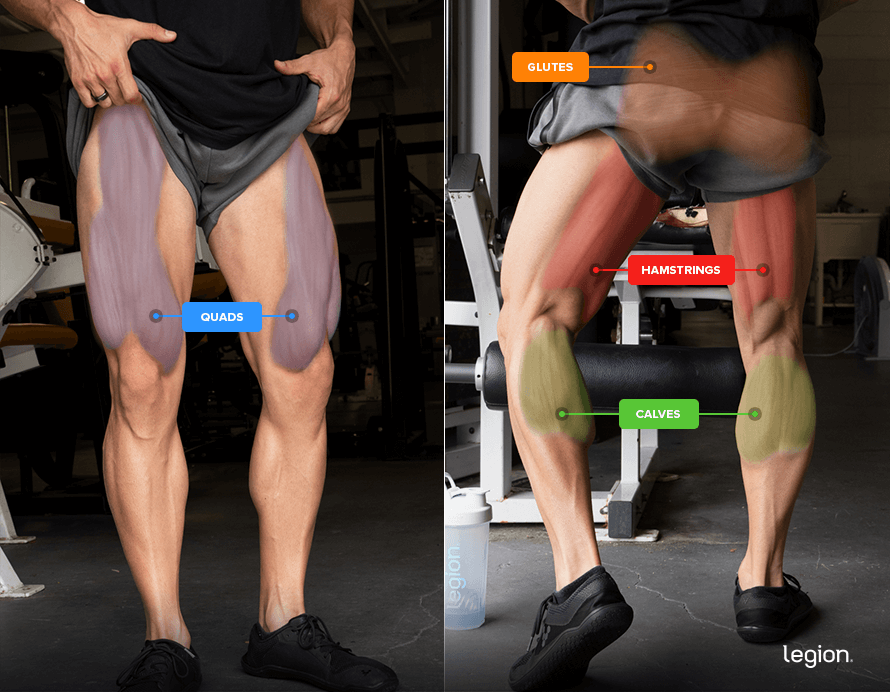
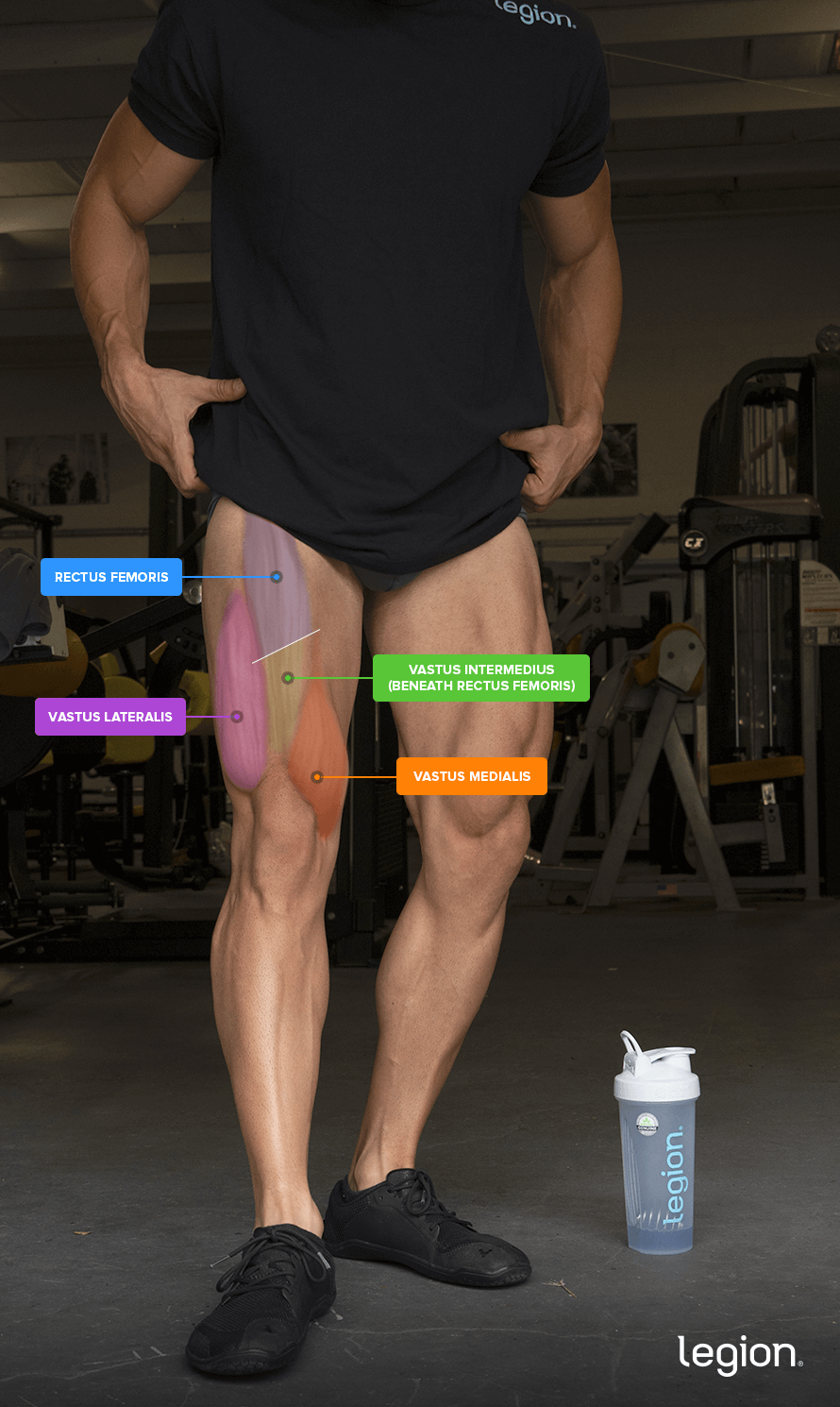
The Bulgarian split squat primarily trains your quads, adductors, and glutes, with your hamstrings and calves assisting slightly.
More Leg and Glute Exercises
- The Best Way to Do the Barbell Romanian Deadlift
- The Best Way to Do the Leg Curl (Hamstring Curl)
- Dumbbell Split Squat: Form, Benefits, & Muscles Worked
The post The Best Way to Do the Dumbbell Bulgarian Split Squat appeared first on Legion Athletics.
https://legionathletics.com/wp-content/uploads/2024/03/Chris-Barakats-Lower-Body-Muscles.png September 16, 2026 at 06:00PM Legion Athletics


Comments
Post a Comment