The Best Way to Do the Seated Calf Raise
- Instructions
- Expert Tips
- Workout Programming
- Mike's Take
- Seated Calf Raise Alternatives
- 3 Seated Calf Raise Workouts
- Muscles Worked by the Seated Calf Raise
- More Calf Exercises
Table of Contents
+Instructions
- Sit on the seated calf raise machine seat, adjust the thigh pad so that it rests just above your knees, and place the balls of your feet on the footplate.
- Lift the pad slightly by pushing through the balls of your feet, and use the safety handle to release the weight.
- Lower the weight as far as possible without letting your toes slip out of position, then pause for 2 seconds.
- Push through the balls of your feet to elevate the thigh pad as high as you can. Once you’ve lifted your heels as high as possible, pause for 1 second, then reverse the movement to return to the starting position.
Expert Tips
- Make sure you pause for a full 2 seconds at the bottom of each rep. This puts maximum tension on your calf muscles and ensures you can’t cheat by bouncing the weight.
- Squeeze your calves hard at the top of every rep for 1–2 seconds. This ensures you’re getting maximum range of motion out of every rep, and that you aren’t using momentum to cheat.
- Rest your hands on top of the thigh pad or hold onto the seat pad, and resist the urge to swing your torso forward and backward.
- Think about driving through your big toe—this helps keep your feet positioned properly on the footplate.
- Lower your heels as far as you can without your toes slipping. You shouldn’t have to keep resetting your feet midset, but you also don’t want to cut the range of motion short, either.
Workout Programming
Program the seated calf raise near the end of a leg, lower-body, or full-body workout, after your more difficult exercises. Or, if you want to focus on growing your calves, you can also try putting it at the beginning of your workout, but I would only do this if you haven’t gotten results despite using good technique and training hard.
A good default is 3 sets of 8–10 reps. Take each set 0–1 reps shy of failure and rest 1–2 minutes between sets.
Mike’s Take
The seated calf raise is an outstanding exercise for building your calves, especially your soleus, the large, deep muscle that runs parallel to the back of your shinbone and under your gastrocnemius, the more angular-looking muscle that sits on top of the soleus.
Both straight-leg and bent-leg calf raises train your soleus and gastrocnemius. A study conducted by researchers at Ritsumeikan University found that standing calf raises produced more gastrocnemius growth in untrained people, while both versions produced similar soleus growth.
I recommend including both in your training.
There are three keys to growing your calves with this exercise:
- Avoid any kind of bouncing during your reps.
- Use a full range of motion.
- Take your sets close or all of the way to failure.
The Achilles tendon can actually function like a spring during calf raises, storing and releasing elastic energy to help move the weight. The more you bounce the weight, the more the Achilles assists, and the less work your calf muscles are forced to do. And, of course, this is why you see most people bouncing their knees when they do seated calf raises—it’s easier.
Instead, pause for a full two seconds at the bottom of every rep to dissipate this stored elastic energy in your Achilles tendons. Here’s what this looks like when done properly:
I also recommend you squeeze your calves as hard as possible for about a second at the top of each rep. The calves only move over a relatively short range of motion, and this helps ensure you take full advantage of it. It also helps reduce the urge to bounce the weights.
Don’t make the mistake of lowering your heels so far that your toes slip off the footplate and you have to keep readjusting your feet midset. Lower them far enough to feel a deep stretch in your calves, but not so much that your feet begin to slip.
Finally, push yourself hard on this exercise. Most people end their sets of seated calf raises when the weight starts to feel difficult, but if you keep pushing, you can almost certainly get another 2–3 reps (or more) after this point.
If you haven’t taken this exercise to true muscular failure—the point where you’re giving your maximum effort with good form and the weight still won’t budge—then try it so you at least know where this point is. Then, aim to take each working set to failure or stop one rep short.
Many people who think they have “bad calf genetics” would actually see rapid gains if they started using proper technique and training harder.
Seated Calf Raise Alternatives
There really aren’t any good, direct alternatives to the bent-leg calf raise, so if your gym doesn’t have one, you’ll have to make do with straight-leg variations.
- Standing Calf Raise Machine. My favorite alternative. They’re easy to set up and isolate the calves very effectively.
- Leg Press Calf Raise. Another excellent substitute, especially if your gym doesn’t have a standing calf raise machine. I like to do these immediately after leg press, since the machine is already loaded with plates.
- Smith Machine Calf Raise. A good alternative to the standing calf raise machine, but not as comfortable and more annoying to set up.
- Seated Dumbbell Calf Raise. This works like a regular seated calf raise, but you rest a dumbbell across your thighs. I’m not a fan—it’s annoying to set up, unstable, and uncomfortable, but it’s an option if you want to try it.
3 Seated Calf Raise Workouts
Here are three sample workouts that show how to program the seated calf raise in a leg workout, a full-body workout, and a calf-focused lower-body workout.
Leg Workout with the Seated Calf Raise
Barbell Back Squat: 3 sets | 4–6 reps | 2–3 min rest
Barbell Romanian Deadlift: 3 sets | 6–8 reps | 2–3 min rest
Leg Extension: 3 sets | 6–8 reps | 1–2 min rest
Seated Leg Curl: 3 sets | 6–8 reps | 1–2 min rest
Seated Calf Raise: 3 sets | 8–10 reps | 1–2 min rest
Standing Calf Raise Machine: 3 sets | 8–10 reps | 1–2 min rest
Full-Body Workout with the Seated Calf Raise
Barbell Back Squat: 3 sets | 4–6 reps | 2–3 min rest
Barbell Bench Press: 3 sets | 4–6 reps | 2–3 min rest
Seated Machine Row: 3 sets | 6–8 reps | 2–3 min rest
Barbell Curl: 3 sets | 6–8 reps | 1–2 min rest
Seated Calf Raise: 3 sets | 8–10 reps | 1–2 min rest
Calf-Focused Lower-Body Workout with the Seated Calf Raise
Seated Calf Raise: 3 sets | 8–10 reps | 1–2 min rest
Leg Press Calf Raise: 3 sets | 6–8 reps | 1–2 min rest
Leg Press: 3 sets | 6–8 reps | 2–3 min rest
Seated Leg Curl: 3 sets | 6–8 reps | 1–2 min rest
Leg Extension: 3 sets | 6–8 reps | 1–2 min rest
Lying Leg Curl: 3 sets | 6–8 reps | 1–2 min rest
To progress these workouts, use double progression: use a weight that allows you to work within the given rep range, take each set 0–1 reps shy of failure, and once you hit the top of the range for your first set, add weight.
Muscles Worked by the Seated Calf Raise
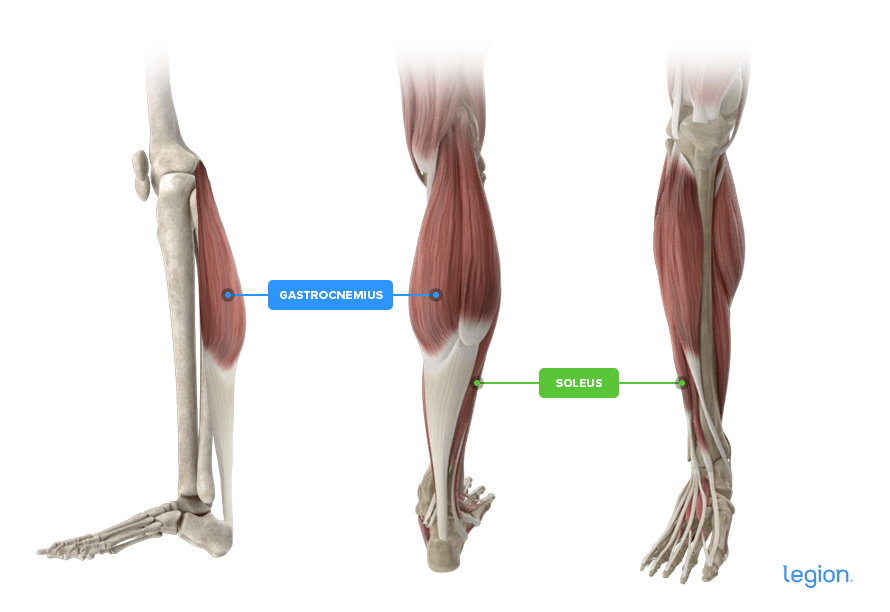
The seated calf raise primarily trains the soleus, the calf muscle beneath the gastrocnemius. The gastrocnemius also contributes, but bending your knees reduces its involvement compared with straight-leg calf raises.
More Calf Exercises
- The 10 Best Calf Exercises for Mass
- Is Calf Size Genetic?
- The Best Full-Body Workout Routines for Building Muscle
The post The Best Way to Do the Seated Calf Raise appeared first on Legion Athletics.
https://ift.tt/DkUIbeG October 2, 2026 at 06:00PM Legion Athletics


Comments
Post a Comment